

Choosing a kitchen color scheme can feel overwhelming. Paint swatches blur together. Inspiration photos look perfect—but never quite match real life. The good news? A fresh-looking kitchen isn’t about chasing trends. It’s about balance, light, and a few smart choices that work with how you actually live.
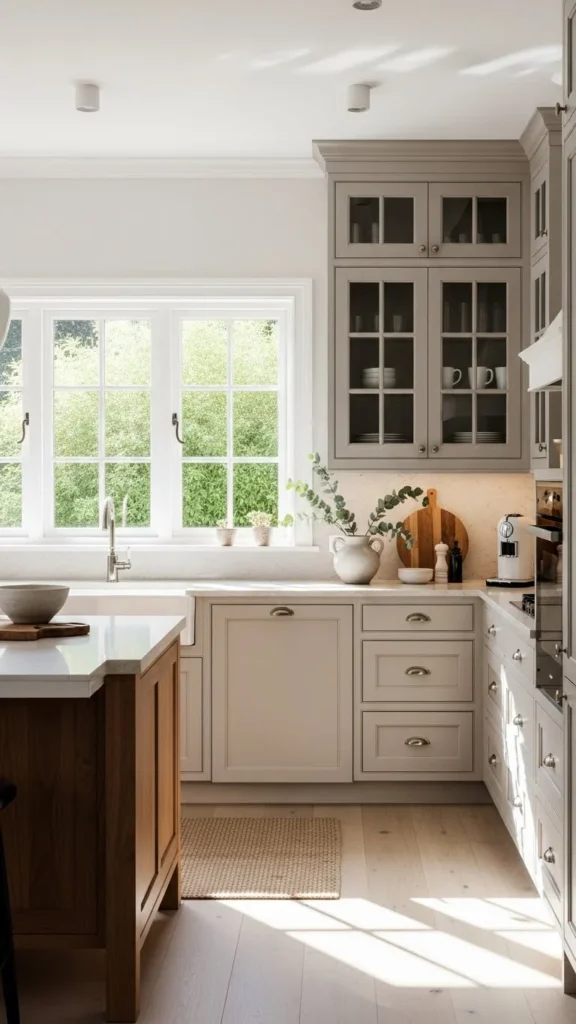
This guide breaks the process down into simple, practical steps so you can choose colors that feel modern, welcoming, and timeless—without second-guessing every decision.
Start With the Light You Already Have
Before you think about color names, look at your kitchen’s natural light. Light changes everything.
Ask yourself:
- Does your kitchen get bright sunlight most of the day?
- Is it shaded or north-facing?
- Does it rely mostly on overhead lighting?
How light affects color:
- Bright kitchens can handle deeper tones without feeling heavy.
- Low-light kitchens benefit from lighter, warmer shades.
- Cool daylight makes colors look sharper.
- Warm lighting softens bold shades.
If your kitchen feels dark, lean into light-reflective colors like soft whites, pale greige, or muted cream tones. These bounce light around and instantly make the space feel fresher.
Choose a Base Color You Won’t Tire Of
Your base color sets the mood. It usually shows up on cabinets, walls, or large surfaces—so it needs staying power.
Popular fresh-feeling base colors include:
- Warm white
- Light gray with beige undertones
- Soft sage
- Pale sand
- Creamy off-white

Tip: Avoid overly cool grays if you want a welcoming feel. They can read flat or cold, especially in kitchens with limited sunlight.
Once your base is set, everything else becomes easier.
Add Contrast With a Second Color
A single color can feel flat. The secret to a fresh kitchen is contrast—but controlled contrast.
You might add it through:
- An island in a darker shade
- Upper cabinets lighter than lower cabinets
- A contrasting backsplash
- Trim or shelving in a different tone
Good pairings include:
- White + soft wood
- Greige + charcoal
- Sage + warm cream
- Navy accents with light neutrals

Keep contrast intentional. Too many competing colors can make the space feel busy instead of fresh.
Use Color to Highlight, Not Overwhelm
Accent colors bring personality, but they work best in small doses.
Think:
- Bar stools
- Dishware on open shelves
- Towels and rugs
- Small appliances
- Art or plants
These accents are easy to change later, which keeps your kitchen flexible as tastes evolve.
Fresh accent ideas:
- Soft terracotta
- Muted mustard
- Dusty blue
- Olive green
- Warm black
If your cabinets are neutral, accents can do more visual work without locking you into a bold commitment.
Let Materials Guide Your Color Choices
Color doesn’t exist on its own. It interacts with finishes, textures, and materials.
Take cues from:
- Countertops
- Flooring
- Hardware
- Wood tones
- Tile patterns

For example:
- Warm wood pairs well with cream, sage, and sand tones.
- Stone counters often look best with muted, natural colors.
- Shiny finishes feel modern with crisp neutrals.
- Matte finishes feel softer with earthy shades.
When colors and materials feel connected, the kitchen feels calm and intentional.
Keep Trends on the Edges
Trends can be fun—but they shouldn’t dominate your kitchen.
Instead of committing fully, try trends in:
- Paintable accent walls
- Decorative tiles
- Lighting fixtures
- Hardware finishes
This approach keeps your kitchen current without risking regret later. When the trend fades, you can update without starting over.
Test Colors the Smart Way
Never rely on a tiny swatch alone.
Do this instead:
- Paint large sample boards
- Move them around the kitchen
- View them in morning, afternoon, and evening light
- Compare them next to cabinets and counters
A color that feels perfect at noon may look completely different at night. Testing saves time, money, and frustration.
Aim for “Fresh,” Not “Perfect”
A fresh kitchen doesn’t mean flawless. It feels light, balanced, and easy to live in.
If you remember nothing else:
- Start with light
- Choose a calm base
- Add contrast carefully
- Let materials guide you
- Keep bold choices flexible
Your kitchen should feel like it belongs to you—not a showroom.
Final Takeaway
The best kitchen color schemes are simple, thoughtful, and adaptable. When colors work with light and materials, freshness follows naturally.
Save this guide for later, and come back to it when you’re ready to pick up that paint sample with confidence.

Leave a Reply