

Open kitchen shelves can instantly make a space feel lighter, warmer, and more lived-in—but only if they’re styled with intention. When shelves feel cluttered or purely decorative, they lose their purpose fast. The goal is functional style: shelves that look good and work hard every day.
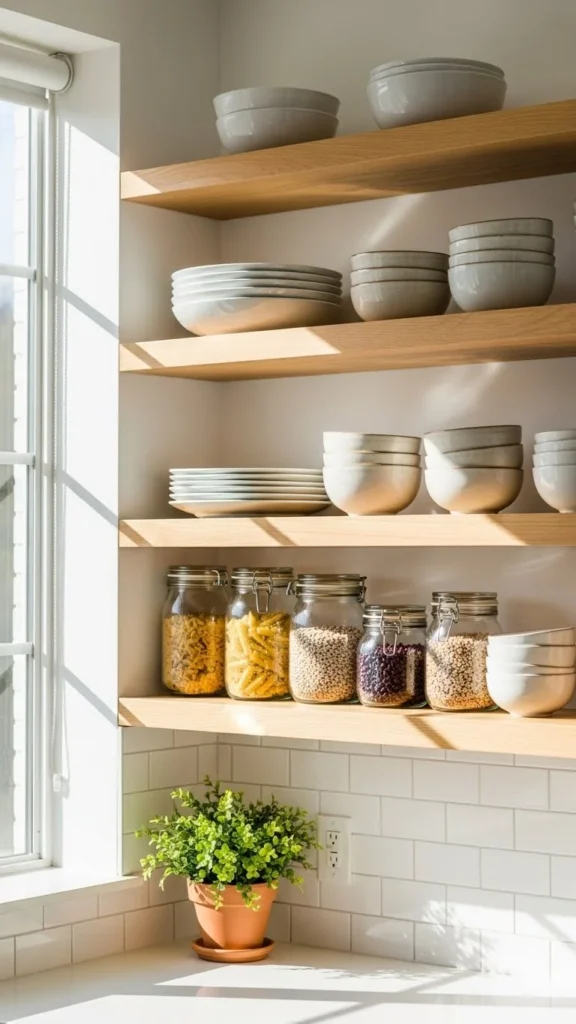
Below is a step-by-step guide to decorating kitchen shelves so they stay practical, personal, and Pinterest-worthy without feeling staged or messy.
Start With Everyday Essentials First
Before adding any décor, decide what actually belongs on your shelves. The most functional shelves showcase items you reach for daily.
Think about:
- Plates and bowls you use all week
- Mugs or cups near the coffee maker
- Frequently used glassware
- Mixing bowls or prep tools
Placing everyday items front and center saves time and makes your kitchen feel intentional rather than decorative-only.
Tip: If you wouldn’t miss an item for a week, it doesn’t need prime shelf space.
Create Visual Balance With Simple Grouping
Once essentials are placed, arrange them in small groups to avoid a scattered look. Grouping helps the shelves feel calm and styled—even when they’re full.
Easy grouping ideas:
- Stack plates in odd numbers (3–5 works well)
- Place bowls inside bowls for depth
- Line up matching mugs handle-in or handle-out
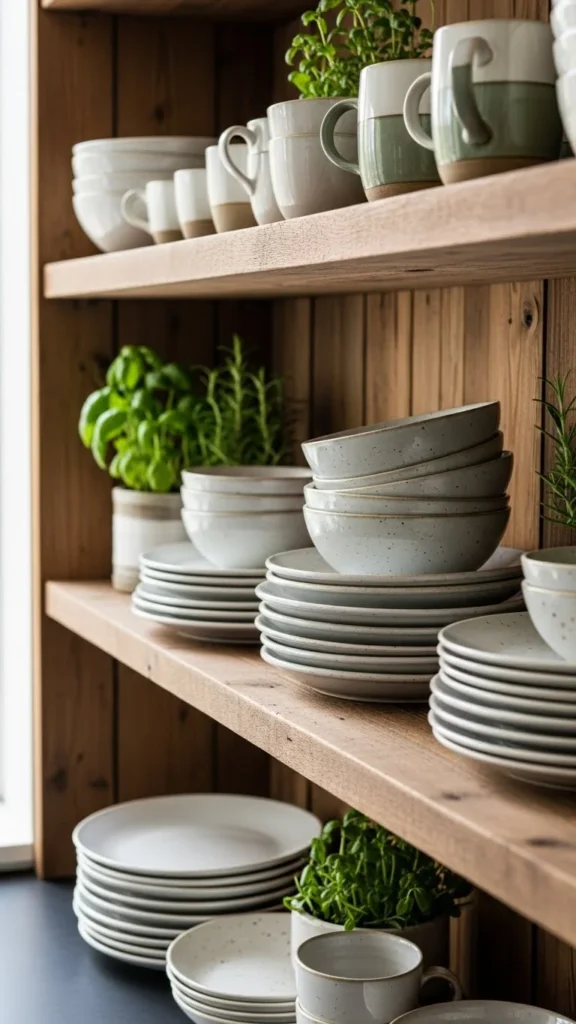
Leave a bit of breathing room between groups. Empty space is part of the design—it keeps shelves from feeling crowded.
Mix Practical Storage With Decorative Containers
Functional doesn’t mean boring. Decorative containers can hold practical items while adding texture and warmth.
Good options include:
- Glass jars for grains or snacks
- Ceramic canisters for tea or sugar
- Wooden boxes for packets or small tools
Clear containers are especially helpful. They let you see what you have and reduce visual clutter.
Budget tip: Repurpose jars you already own. Remove labels, wash thoroughly, and keep the look consistent.
Add Texture With Natural Materials
Texture is what makes shelves feel styled instead of sterile. Even a very neutral kitchen benefits from a few organic touches.
Try mixing in:
- Wooden cutting boards leaned against the wall
- Woven baskets for lightweight items
- Stoneware or matte ceramics
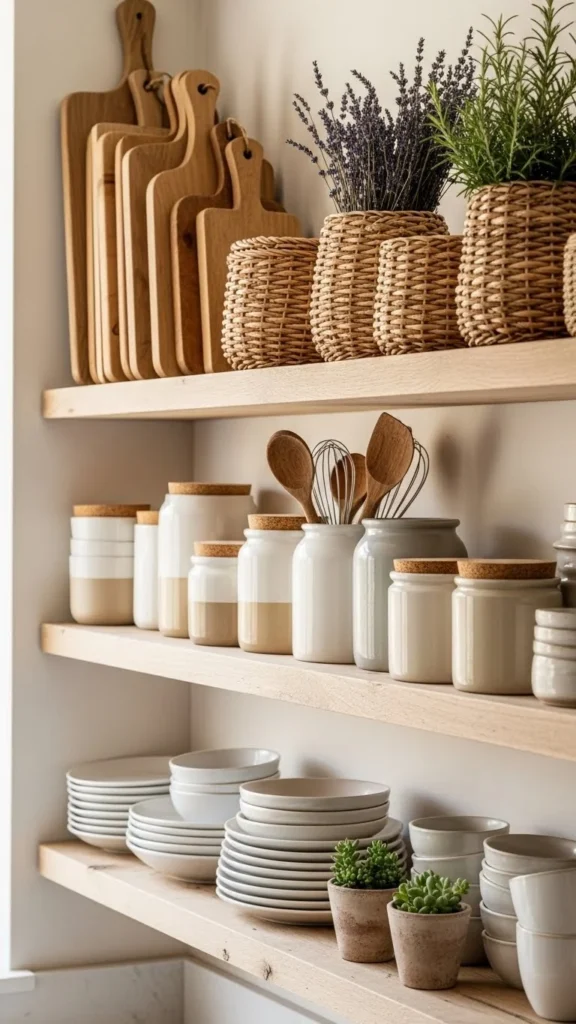
Limit textures to two or three types so the shelves still feel cohesive.
Use Plants Sparingly for Freshness
A little greenery goes a long way on kitchen shelves. Plants soften hard surfaces and add life without overwhelming the space.
Best plant choices:
- Small potted herbs
- Trailing plants on the top shelf
- Faux greenery if light is limited
Keep plants minimal—one per shelf or every other shelf is plenty.
Care tip: Choose low-maintenance options so your shelves don’t become a chore.
Keep Color Palettes Tight
A tight color palette is the secret to shelves that always look styled, even when things move around.
Easy palettes that work:
- White, wood, and soft gray
- Neutral ceramics with clear glass
- Black accents with warm wood
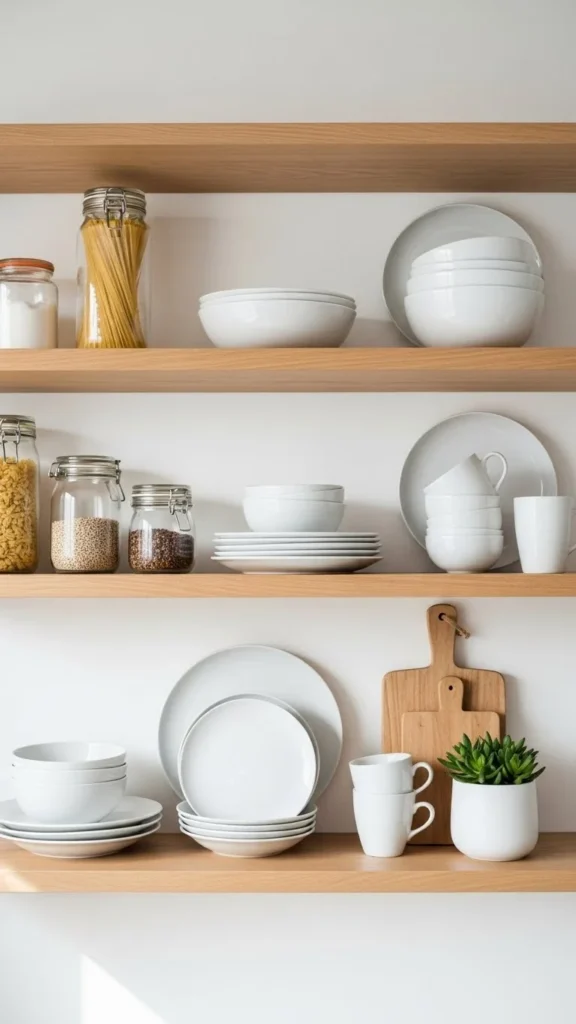
If your dishes are colorful, balance them with neutral containers so the shelves don’t feel busy.
Rotate Items Seasonally (Without a Full Redo)
You don’t need to restyle everything to keep shelves fresh. Small seasonal swaps can make a big impact.
Simple rotation ideas:
- Switch out one plant or bowl
- Change a cutting board shape
- Add a seasonal cloth or small accent
This keeps shelves feeling current without losing function.
Do a Weekly Quick Reset
Functional shelves stay beautiful when they’re lightly maintained. A quick weekly reset keeps things from drifting into clutter.
Five-minute reset checklist:
- Restack plates
- Wipe shelf surfaces
- Remove items that don’t belong
This habit makes open shelving feel effortless instead of stressful.
Final Takeaway
Decorating kitchen shelves with functional style is all about intention. Use what you love. Keep what you need. Leave space to breathe. When shelves work for your daily routine, they naturally look better—and stay that way.
Save this guide for later and refresh your kitchen shelves with confidence.

Leave a Reply