

Bar stools seem like a small detail—until you sit on one that’s too tall, too hard, or totally clashes with your space. The right bar stools can instantly make a kitchen island, breakfast bar, or home counter feel more inviting and put-together. The trick is balancing comfort, proportion, and personal style without overthinking it.
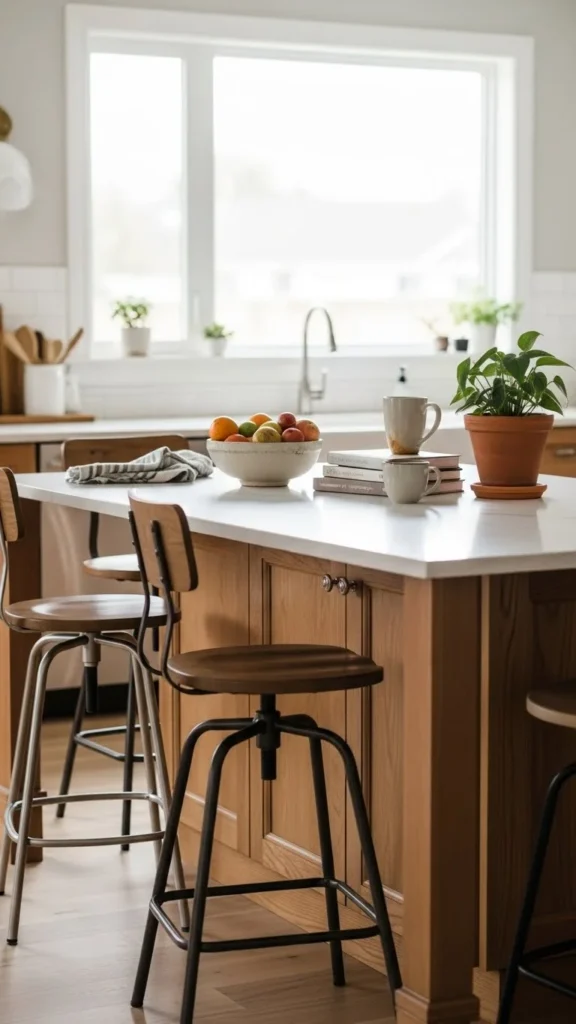
Let’s break it down step by step so you can choose bar stools that look great and feel good to use every day.
Measure First: Height Matters More Than You Think
Before falling in love with a design, grab a measuring tape. Stool height is the most important comfort factor.
Here’s a simple rule of thumb:
- Leave 9–12 inches between the seat and the underside of the counter.
- This gives enough legroom without feeling cramped.
Common sizes:
- Counter-height stools (24–26 inches): Best for standard kitchen counters.
- Bar-height stools (28–30 inches): Designed for taller bar surfaces.
If you’re between sizes, choose slightly lower. It’s easier to sit comfortably than to perch too high.
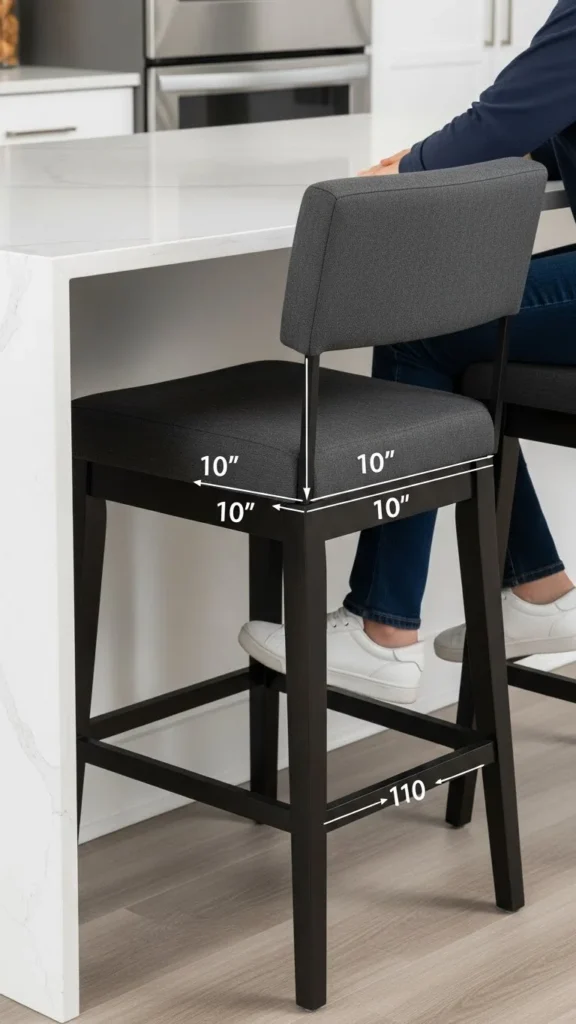
Decide How You’ll Actually Use Them
Think about real life—not just how the stools look in photos.
Ask yourself:
- Will people sit here for quick snacks or longer meals?
- Is this a high-traffic family space or a quieter corner?
- Do kids or guests use the stools often?
For daily use, prioritize:
- Backrests for support
- Footrests to reduce leg strain
- Slightly wider seats for comfort
Backless stools work well for quick seating and small spaces, but backed stools are more comfortable for lingering.
Choose a Seat That Feels Good, Not Just Looks Good
Seat material affects both comfort and maintenance.
Popular options include:
- Wood – Warm, durable, and timeless
- Upholstered fabric – Soft and cozy, great for long sitting
- Faux leather – Easy to wipe clean and polished-looking
- Woven or cane – Light, textured, and casual
If you sit often, a lightly padded seat makes a noticeable difference.
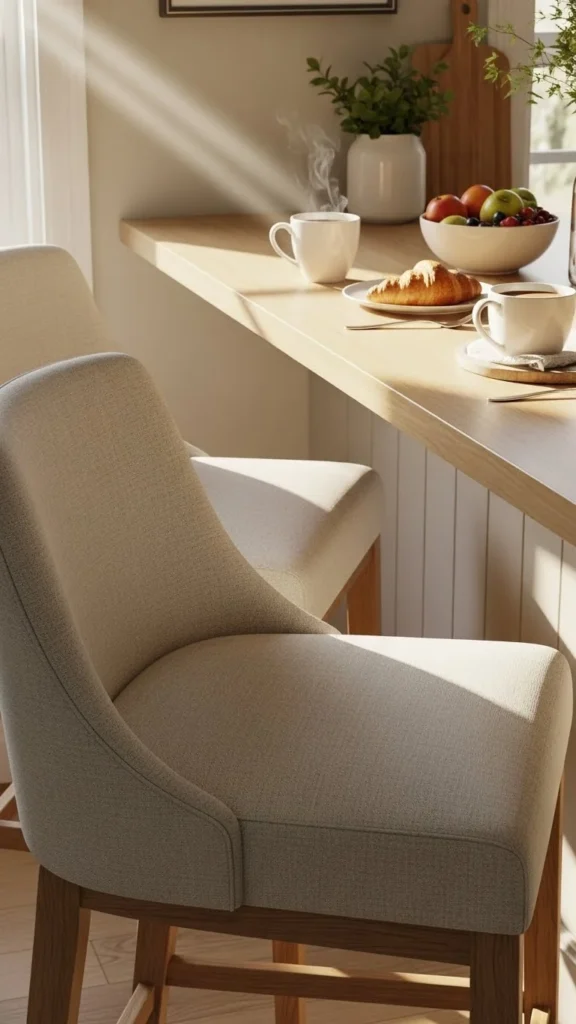
Match the Style to Your Space (Not the Trend)
Bar stools don’t have to perfectly match your cabinets—but they should feel intentional.
Use these style cues:
- Modern kitchens → clean lines, metal accents, simple shapes
- Farmhouse spaces → wood finishes, classic silhouettes
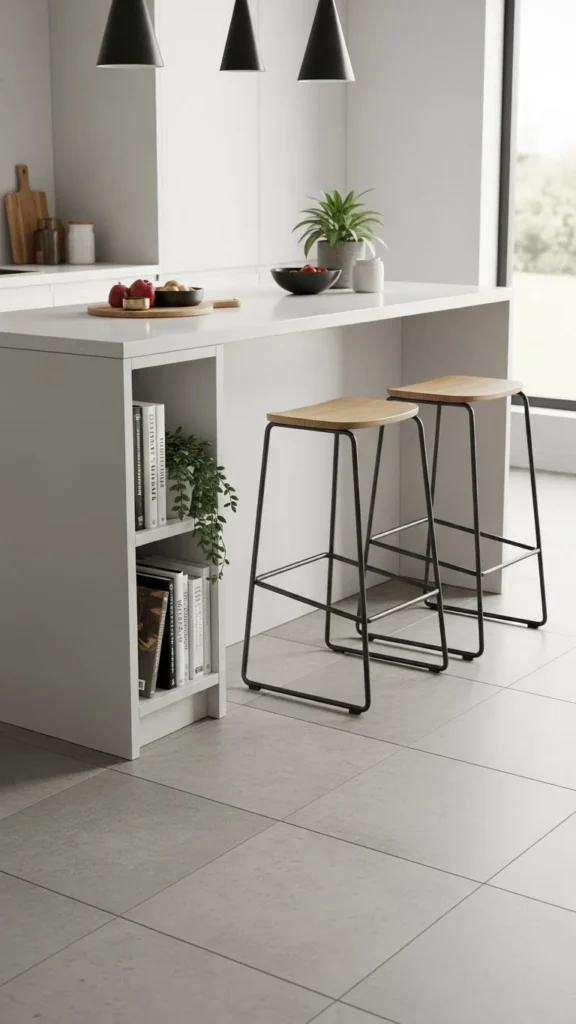
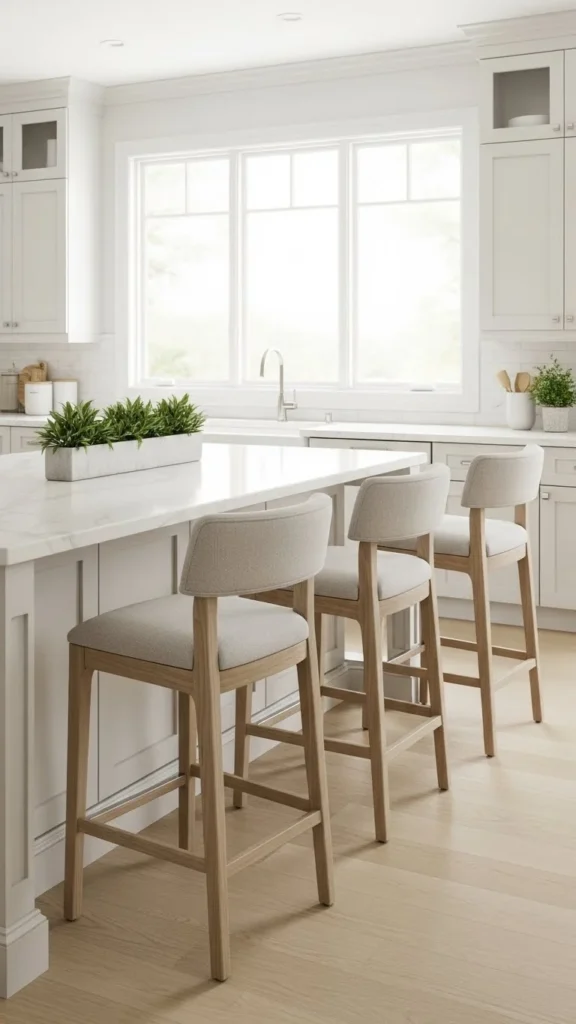
- Minimal interiors → slim frames, neutral colors
- Eclectic rooms → mix materials or add subtle texture
A helpful trick: let stools either blend in quietly or stand out on purpose. Avoid the awkward middle where they almost match but not quite.
Don’t Forget Proportion and Spacing
Even beautiful stools can feel wrong if they’re crowded.
Spacing guidelines:
- Leave 6–10 inches between each stool
- Avoid oversized seats in narrow kitchens
- Make sure stools tuck in easily when not in use
If space is tight:
- Choose backless or armless designs
- Look for slimmer legs and frames
Swivel or Stationary? Think About Movement
Swivel stools add flexibility, especially in open layouts. They’re great when:
- People turn between the island and nearby seating
- The space is social and active
Stationary stools feel more grounded and:
- Work better in smaller kitchens
- Look cleaner and more minimal
If you have kids or limited space, stationary stools are usually the calmer choice.
Color Choices That Age Well
Neutral stools are easier to live with long-term, but that doesn’t mean boring.
Timeless picks:
- Warm wood tones
- Soft beige, gray, or cream upholstery
- Matte black or brushed metal frames
If you want color, try:
- Earthy greens or muted blues
- Texture instead of bold patterns
Final Takeaway
The best bar stools aren’t just stylish—they’re comfortable, practical, and suited to how you live. Measure carefully, think about daily use, and choose materials and shapes that feel natural in your space. When comfort and style work together, your bar area becomes a place people actually want to sit.
Save this guide for later when you’re shopping—or planning a refresh!

Leave a Reply