

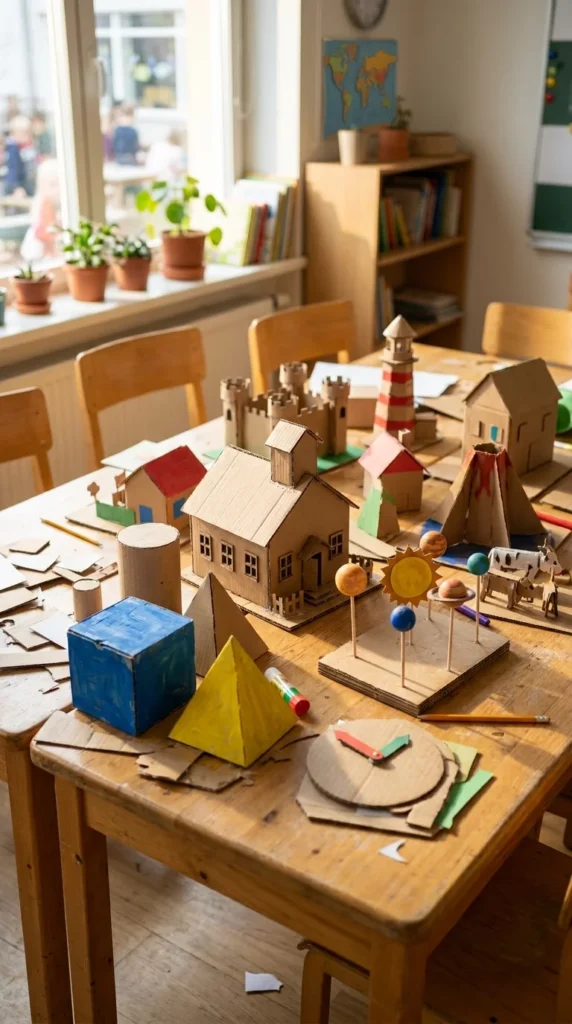
Cardboard is one of the easiest materials for school projects because it is cheap, easy to cut, and widely available. Students can turn simple boxes into learning tools, models, and classroom displays without expensive supplies. These crafts help build creativity, problem-solving, and hands-on learning habits. Teachers can also use them for interactive lessons that feel practical and fun. Below are 26 simple cardboard school project crafts that fit classroom activities and homework assignments.
1. Cardboard Pencil Holder
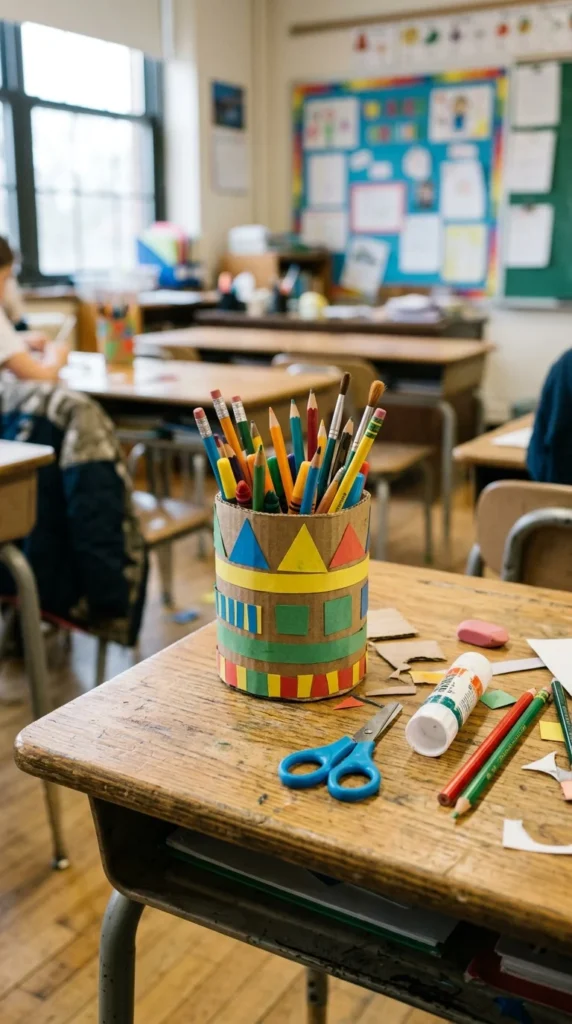
A cardboard pencil holder is one of the easiest classroom crafts. Start with a clean cardboard tube or roll and cut it to the height of a pen or pencil. Glue a circular base at the bottom using thick cardboard. Cover the outside with colored paper, old magazines, or paint. Students can draw shapes or patterns for decoration. Small compartments can be added by dividing the tube with cardboard strips. This helps organize pens, erasers, and rulers on desks. It is a simple way to teach recycling and organization at the same time. Cost is almost zero since leftover boxes can be used. Teachers often assign this as a first project because it introduces cutting, measuring, and gluing in a controlled way. Each student can personalize their holder with their name or favorite shapes. It fits well in classroom desk organization activities.
2. Mini Classroom Desk Organizer
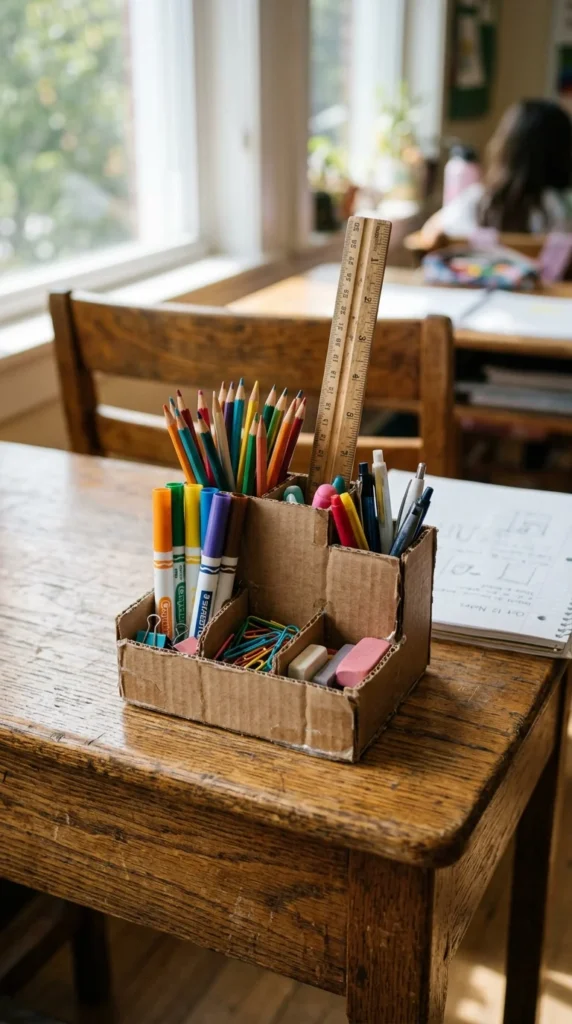
A mini desk organizer made from cardboard helps students keep their supplies in order. Use a medium-sized box and divide it into sections using smaller cardboard pieces. Each section can hold different items like pencils, glue sticks, and paper clips. Cover the outside with plain paper or recycled gift wrap. Students can draw small icons on each section for easy sorting. This project teaches planning and arrangement skills. It also reduces mess on desks. Glue and tape are enough for construction, so no expensive tools are required. Teachers can assign different designs to each student for variety. Some may create three sections, while others may add five or more compartments. It is useful in classrooms where shared supplies are common. The final result is a lightweight organizer that students can carry home or keep in school.
3. Cardboard Solar System Model
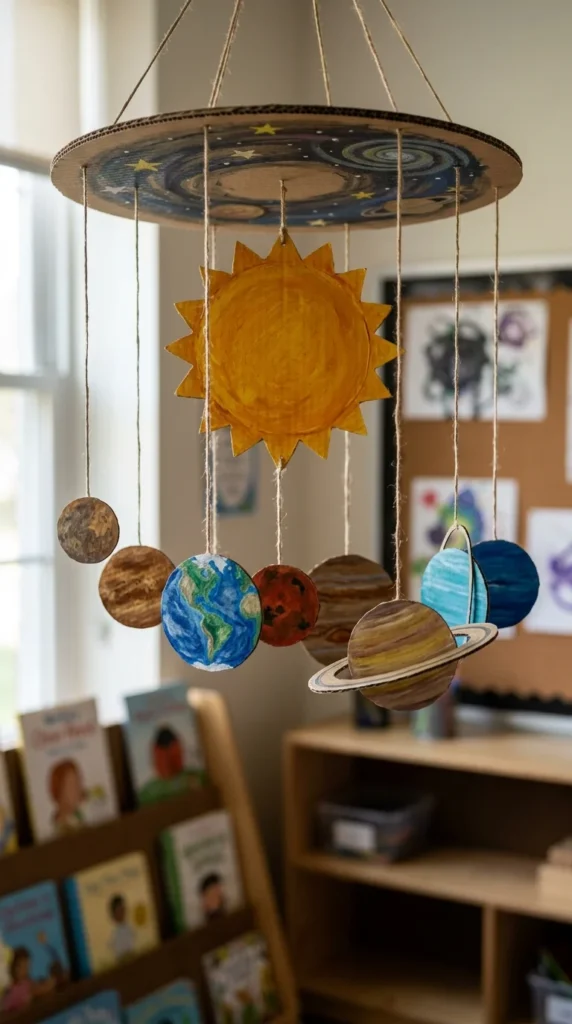
A solar system model using cardboard helps students understand space in a visual way. Cut a large circle from cardboard for the base. Paint or attach smaller cardboard circles for planets. Use strings to hang them at different heights. Each planet can be painted in different colors using simple craft paint. Students learn order and spacing between planets while building the model. This project works well in group activities where each student handles one planet. Recycled materials like bottle caps or foil can add texture to planets. The model can be displayed in classrooms or science fairs. It is light, easy to carry, and simple to assemble. Teachers often use this craft during astronomy lessons to make abstract ideas easier to understand.
4. Cardboard Volcano Model
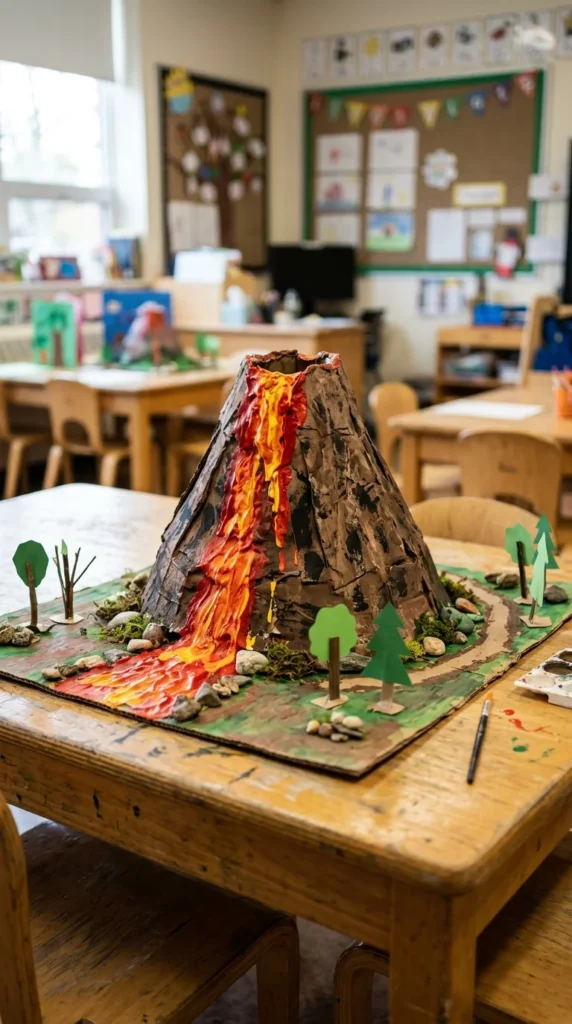
A cardboard volcano model is a popular science project. Start with a cone-shaped cardboard structure and place it on a base. Cover it with paper or clay-like layers made from crumpled paper. Paint the surface in brown and gray shades. Red paint can represent lava flowing down. Students can also simulate eruption using baking soda and vinegar if allowed in class experiments. This craft helps explain basic earth science topics like eruptions and magma movement. It is low-cost and uses simple materials like glue, tape, and recycled cardboard. Group work can make it more interactive, with each student contributing to landscape details like trees or rocks.
5. 3D Geometric Shapes Set
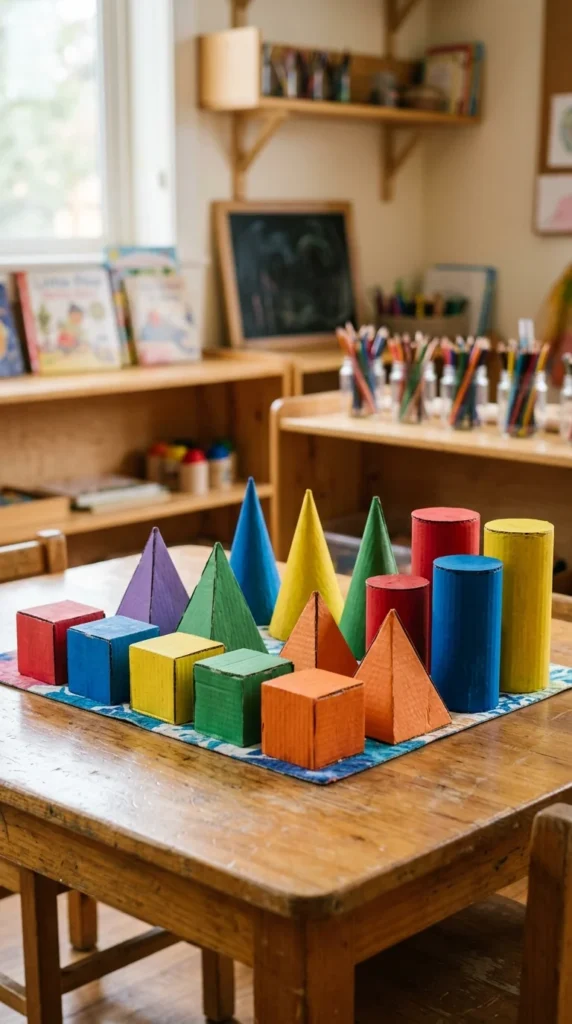
Students can build 3D geometric shapes using cardboard nets. Cut flat shapes like squares, triangles, and circles, then fold and glue them into cubes, pyramids, and cones. This activity helps in understanding geometry concepts in a hands-on way. Each shape can be colored differently for easy identification. Teachers often assign different shapes to students for group presentations. It also helps improve measuring and cutting accuracy. These models can be used during math lessons for visual learning. Cardboard makes the shapes sturdy enough for repeated classroom use. Students enjoy comparing shapes and understanding edges and faces.
6. Cardboard Animal Puppets
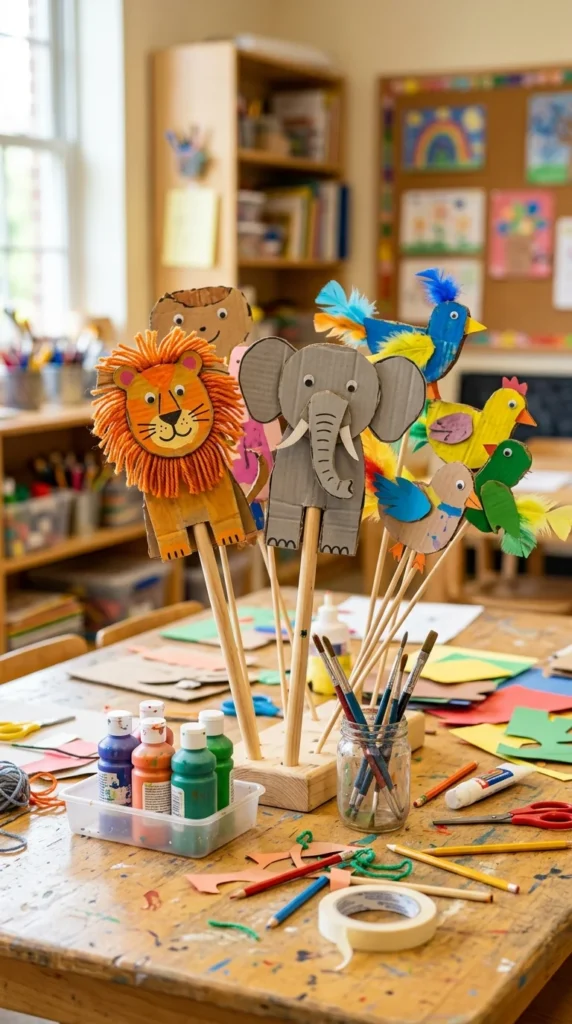
Cardboard animal puppets are fun for storytelling sessions. Draw animal shapes on cardboard and cut them carefully. Attach sticks or straws to hold them. Paint or color each animal with simple designs. Students can create zoo or forest scenes using their puppets. This activity improves creativity and speaking skills during class presentations. It also supports group storytelling where each student plays a character. Materials needed are minimal, mostly recycled cardboard and basic coloring tools. Puppets can be stored easily in folders after use. Teachers often use this craft for language learning sessions.
7. Storytelling Puppet Theatre
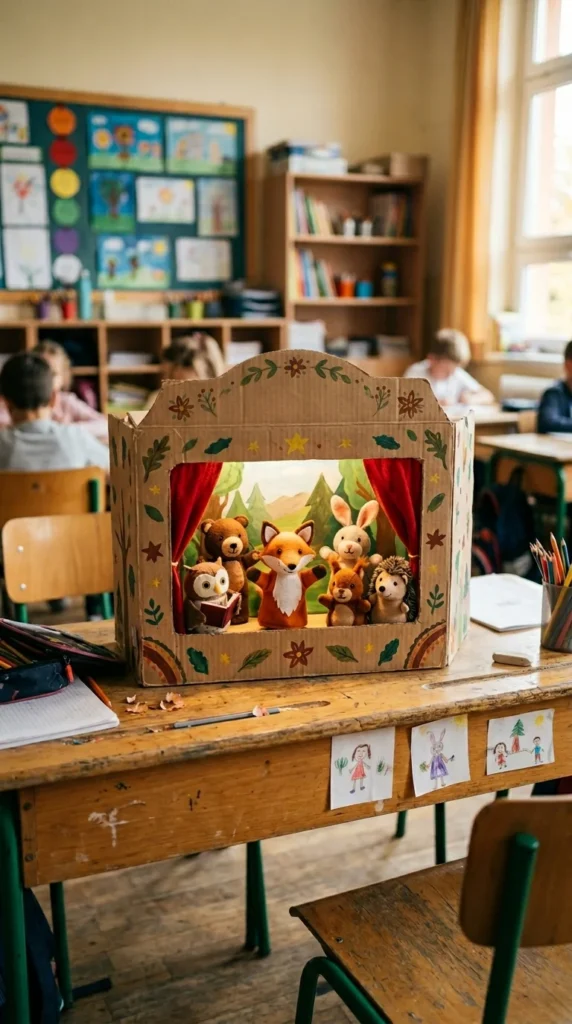
A cardboard puppet theatre creates a stage for storytelling. Use a large box and cut a front window to form the stage. Decorate the front with simple designs. Students perform stories using cardboard puppets behind the stage. This project builds confidence and communication skills. It also encourages teamwork in group performances. The theatre can be folded and stored after use. Decorations can be made using colored paper or markers. It is a low-cost classroom activity that adds excitement to language lessons.
8. Cardboard Alphabet Learning Wall
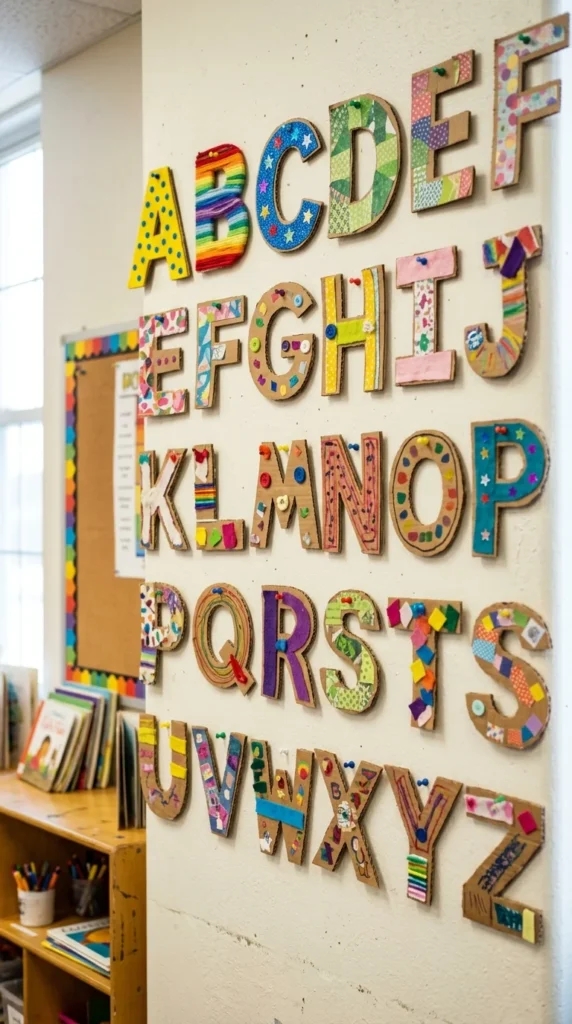
Alphabet learning walls made from cardboard help younger students learn letters visually. Cut each letter from cardboard and decorate with colors or patterns. Attach them to a classroom wall in order or random groups for learning games. Students can match objects with letters during activities. This hands-on method helps memory retention. Letters can be reused for spelling games. Teachers often rotate letters for different lessons. It is simple, reusable, and interactive.
9. Fraction Learning Pizza Wheels
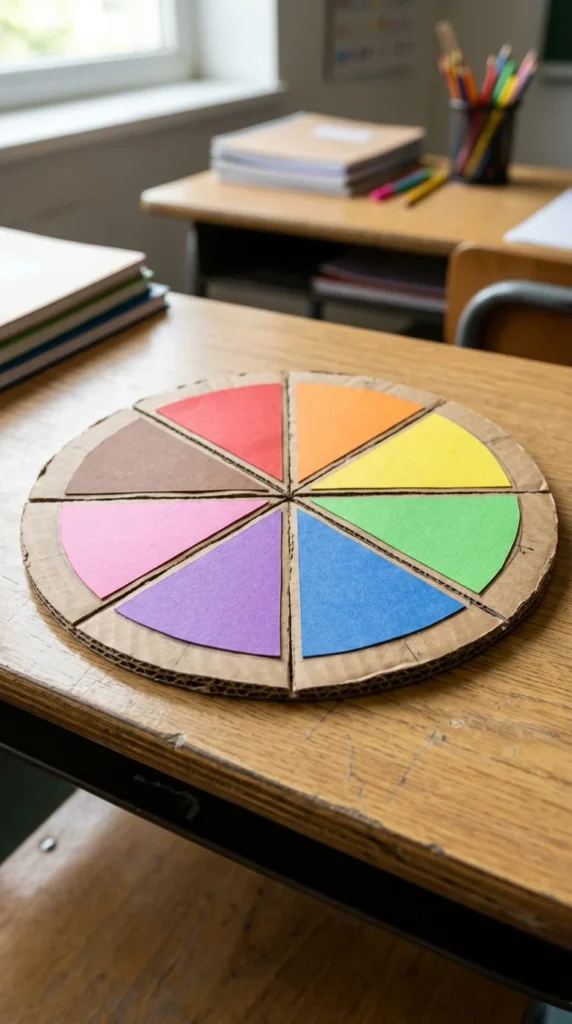
Cardboard pizza wheels help explain fractions. Cut a circle and divide it into equal slices. Each slice can be colored differently. Students can learn halves, thirds, and quarters visually. The slices can be moved or removed to show comparisons. This craft makes math lessons easier to understand. It is especially helpful for younger students who learn better with visuals. Materials are basic cardboard and coloring tools.
10. Clock Face Teaching Time
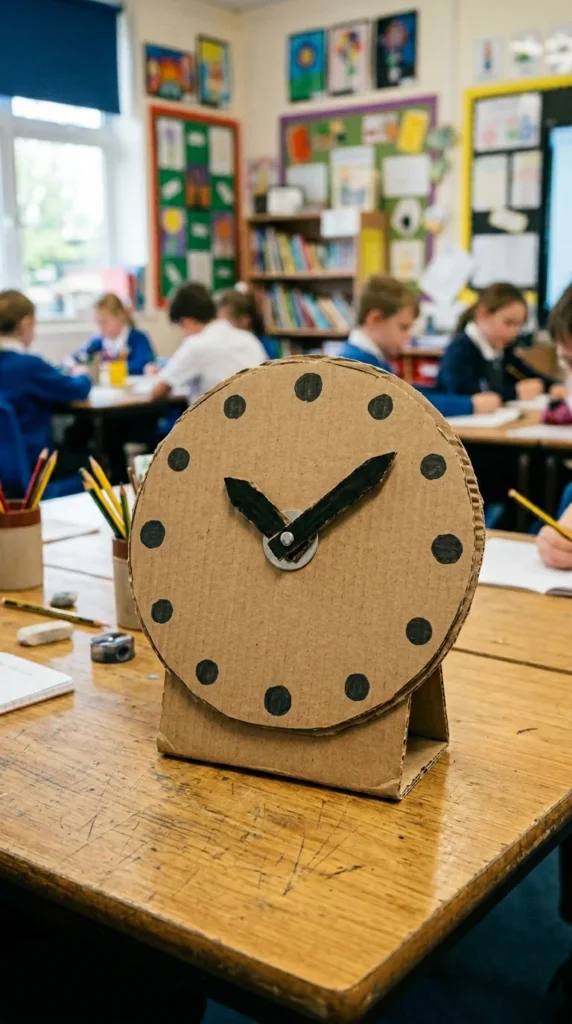
A cardboard clock helps students learn how to tell time. Cut a circle and add movable hands using pins. Mark hours using drawn symbols or shapes. Students can practice setting different times. Teachers use this for daily time lessons. It improves understanding of hour and minute movement. It is reusable and easy to adjust during class exercises.
11. Cardboard World Map
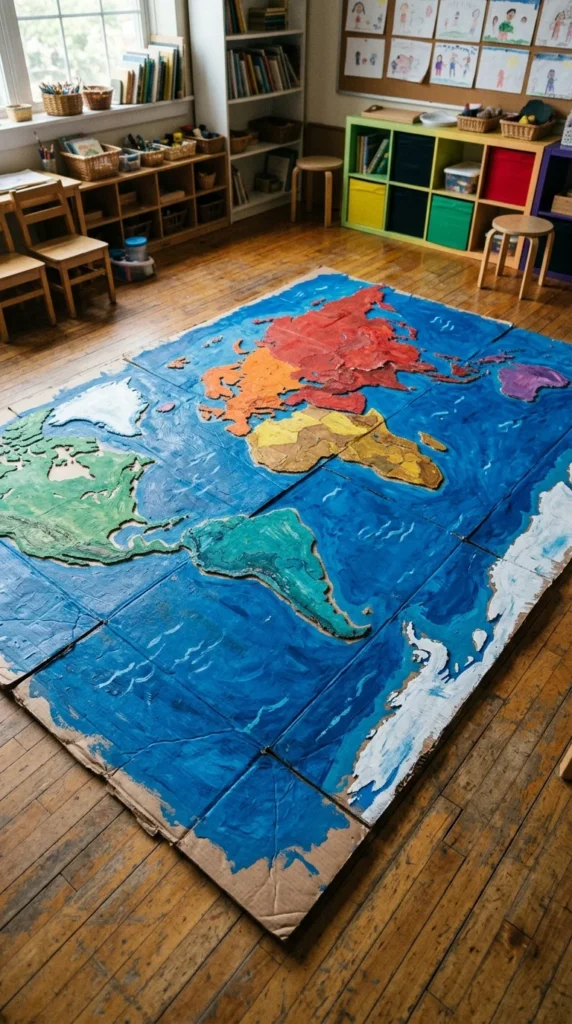
A world map made from cardboard helps geography lessons. Draw continents and paint them in different colors. Students can label countries verbally during class discussions. It supports group learning activities. This project builds awareness of global geography in a visual format. It is large enough for classroom display.
12. Mini Library Bookshelf
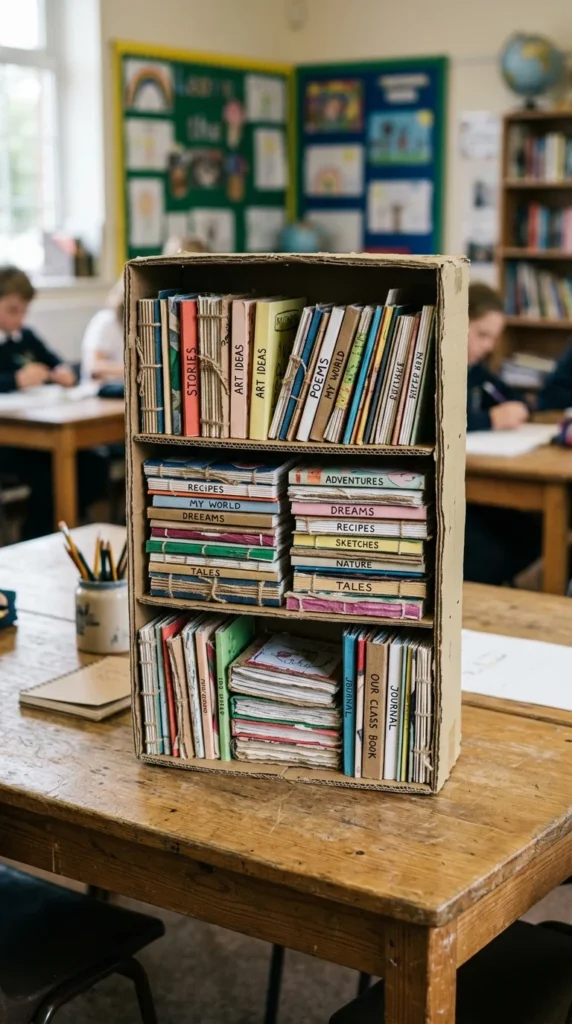
A mini bookshelf made from cardboard helps organize storybooks. Cut shelves and stack them into layers. Decorate the outside with simple patterns. Students can store reading materials inside. It promotes reading habits in classrooms. It is lightweight and easy to move.
13. Snakes and Ladders Game Board
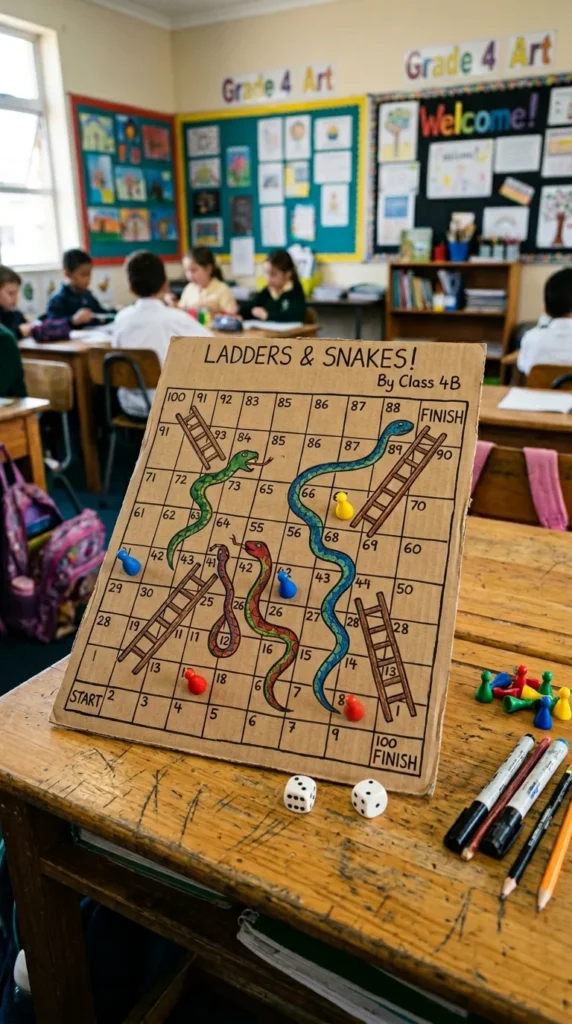
A cardboard snakes and ladders board turns learning into play. Draw a grid and add ladders and snakes. Students can play during free periods. It improves counting skills and patience. It is easy to customize with themes.
14. Recycling Awareness Poster Board
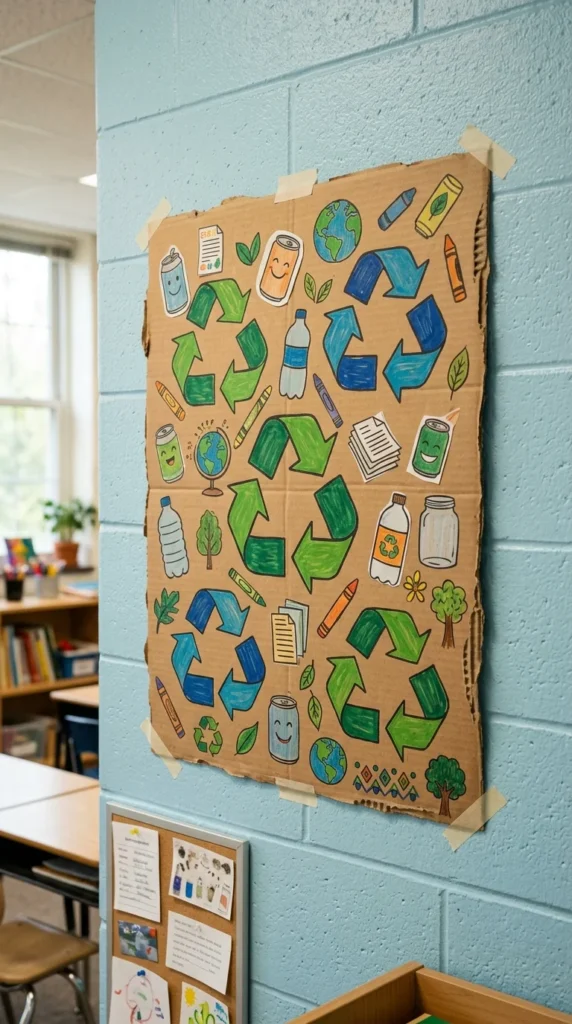
Students create posters promoting recycling using cardboard cutouts. Shapes like bottles, trees, and bins can be added. It teaches environmental awareness through art.
15. Cardboard Robot Model
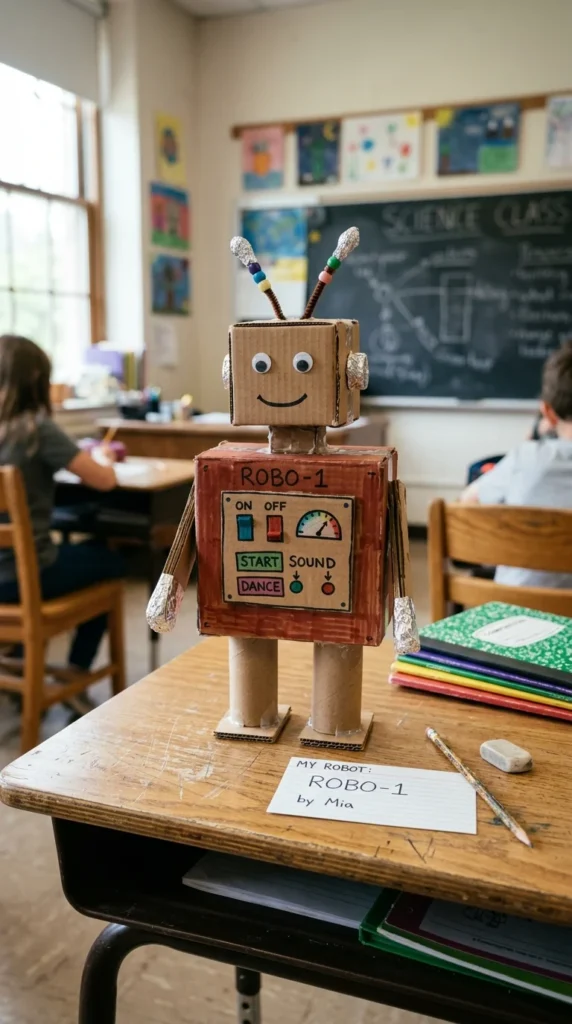
A robot model encourages creativity in science lessons. Boxes form the body, arms, and head. Students decorate it using foil and paper.
16. Science Display Stand
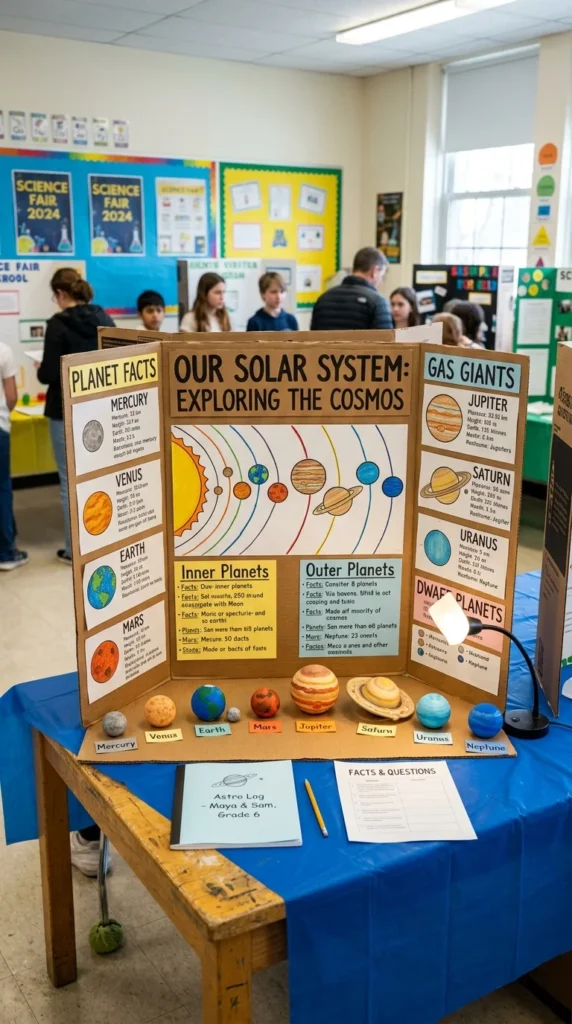
A display stand helps present science projects neatly. It supports charts and models during exhibitions.
17. Cardboard Bridge Model
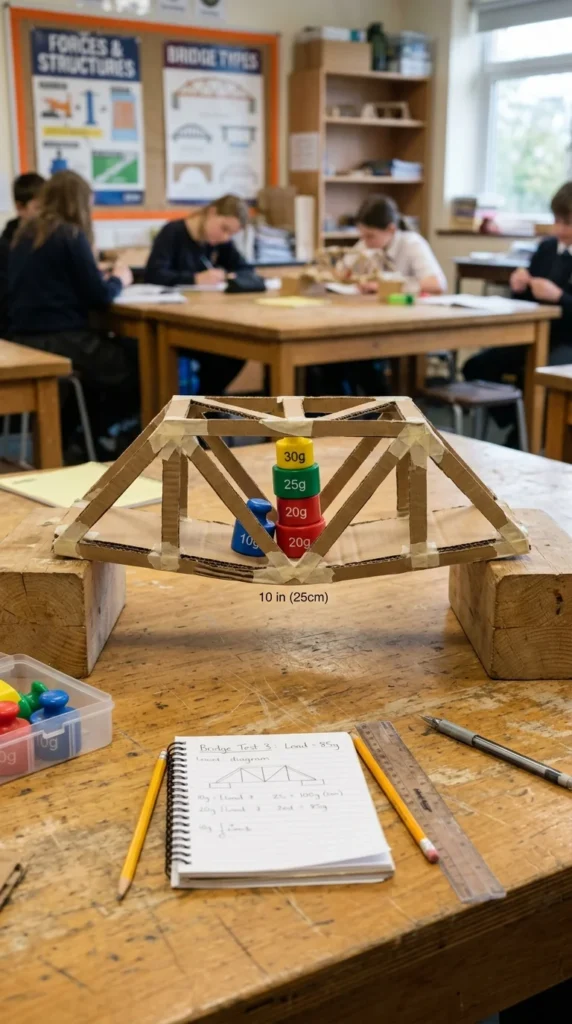
Students build bridges to learn basic engineering concepts. Different shapes show strength and balance.
18. Simple Cardboard Car Model
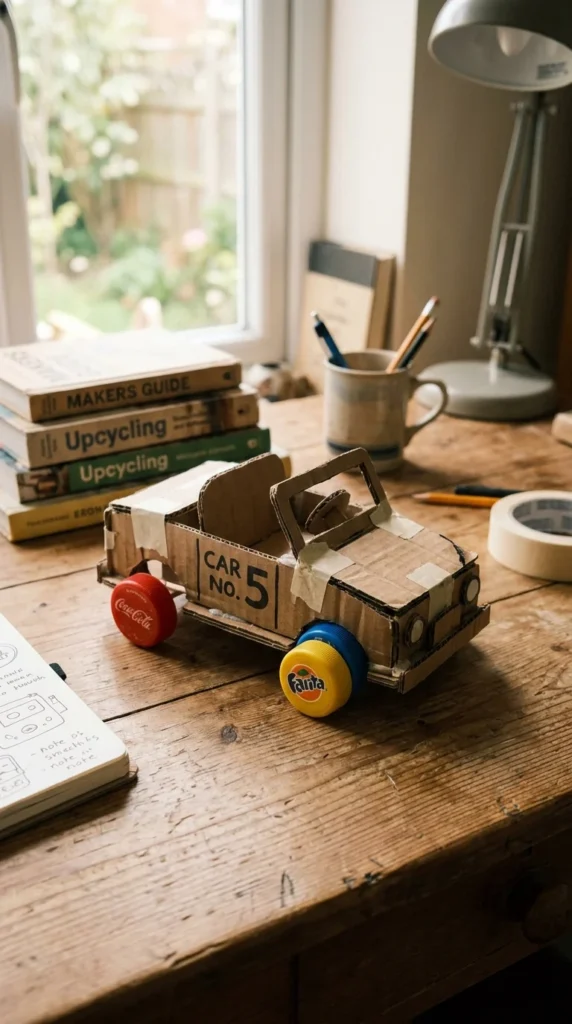
A car model introduces motion and design ideas. Students build and test movement using wheels.
19. Cardboard House Model
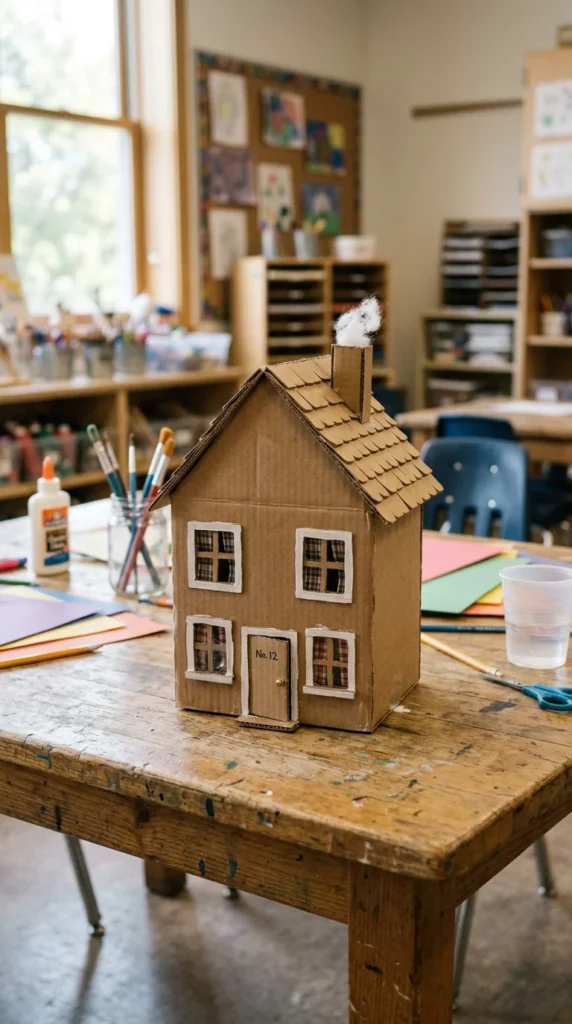
A house model helps understand architecture basics. Students design rooms and structures.
20. Historical Diorama Scene
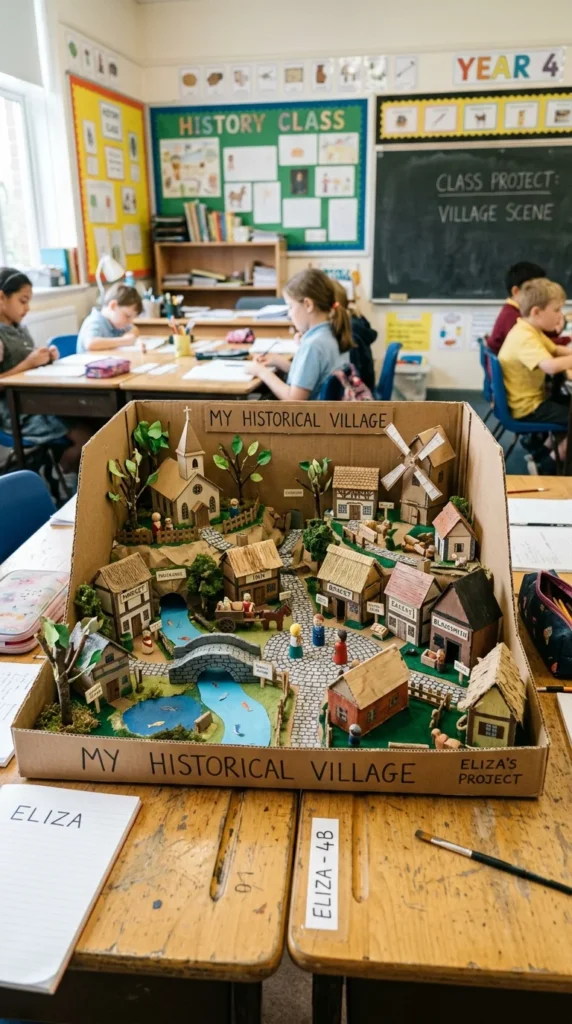
Dioramas help students visualize history topics using miniature scenes.
21. Cardboard Musical Instruments
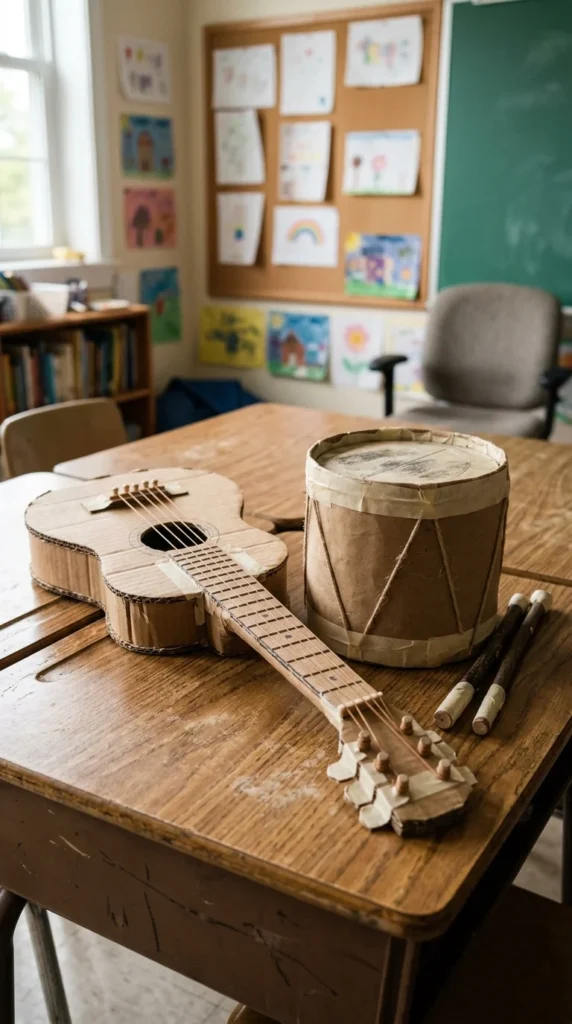
Students create simple instruments to explore sound and rhythm.
22. Name Plate Desk Tags
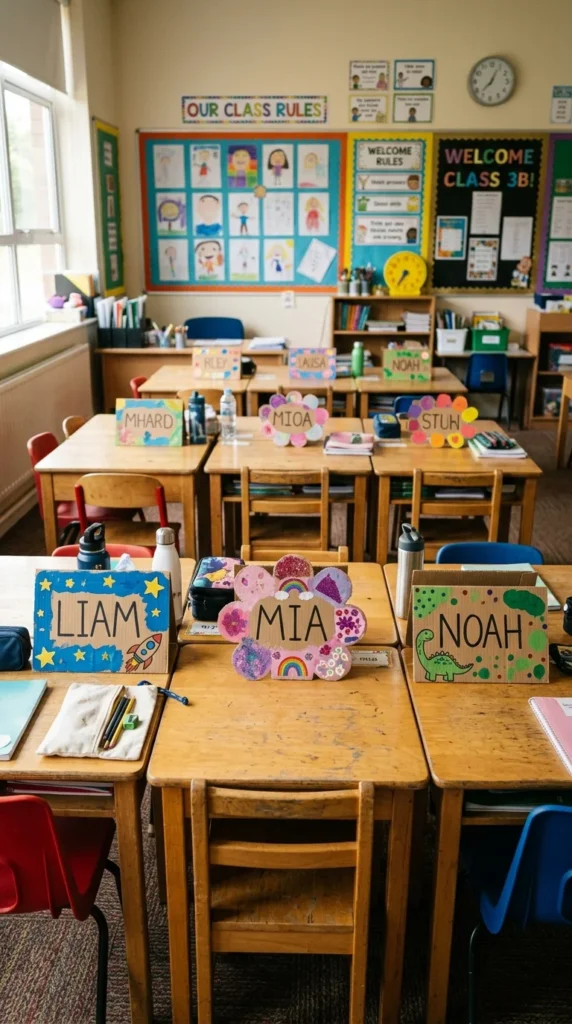
Desk tags help organize seating and classroom identification.
23. Spelling Box Game
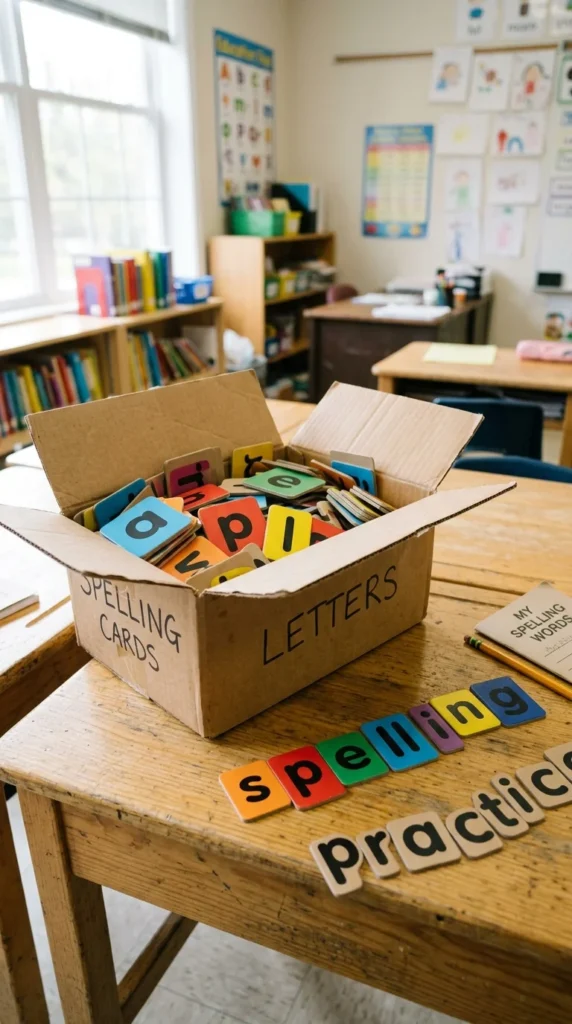
A spelling box improves word formation skills through interactive play.
24. Solar System Mobile Hanging
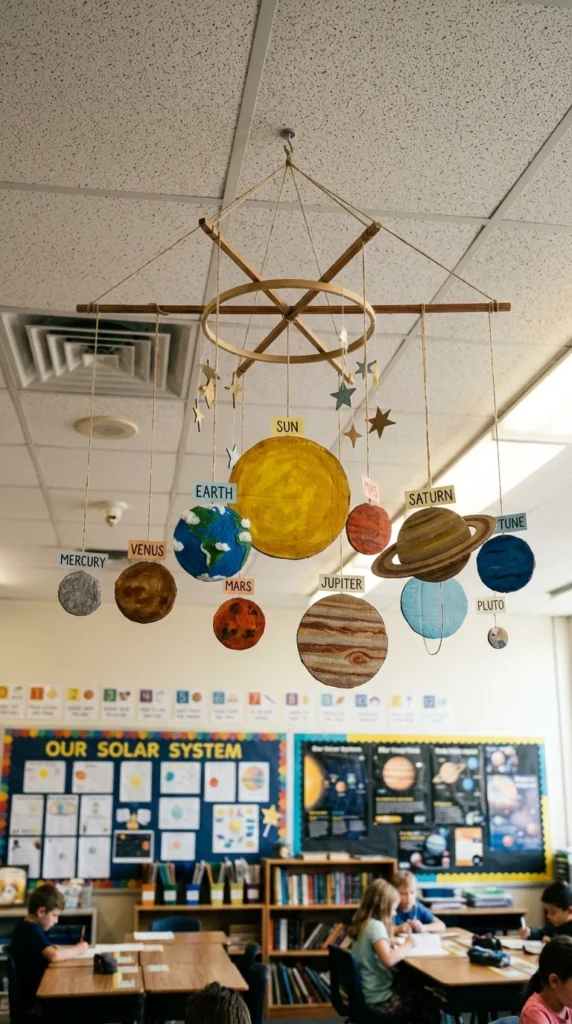
A hanging mobile shows planet arrangement in a visual way.
25. Cardboard Camera Craft
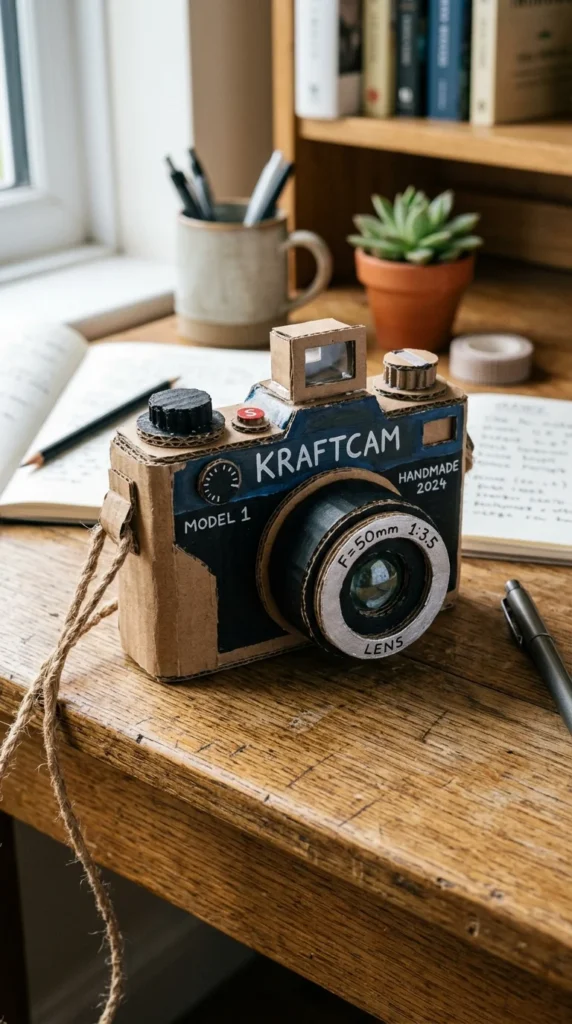
A camera model helps students learn about basic photography tools.
26. Assignment Storage File Holder
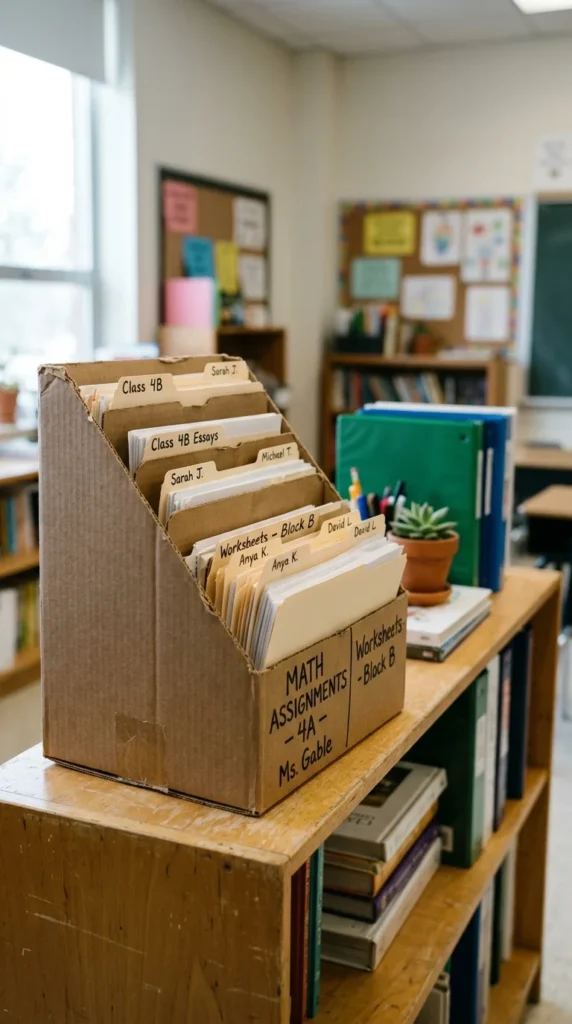
A file holder keeps assignments organized and easy to access.
Conclusion
Cardboard school crafts give students simple ways to learn through making, cutting, and designing. Each project uses low-cost materials and supports classroom learning in subjects like math, science, geography, and language. These activities also help build patience, coordination, and teamwork. Teachers and students can adapt each idea for different grade levels and lesson goals, making everyday learning more practical and hands-on.

Leave a Reply