

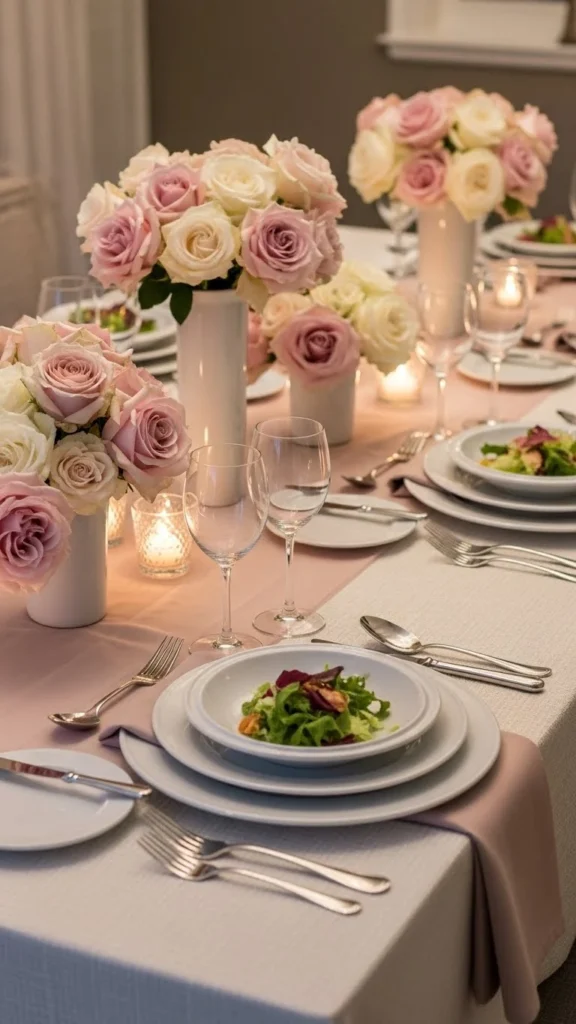
Rose centerpieces remain a favorite choice for elegant dinner tables because they feel timeless and inviting. The right arrangement can shape the mood of a gathering without feeling overdone or costly. This guide shares practical rose centerpiece ideas that work for everyday dinners, special occasions, and seasonal hosting. Each idea focuses on simple styling, affordable materials, and easy DIY steps so your table feels intentional and welcoming without stress.
Soft Neutral Rose Bowl
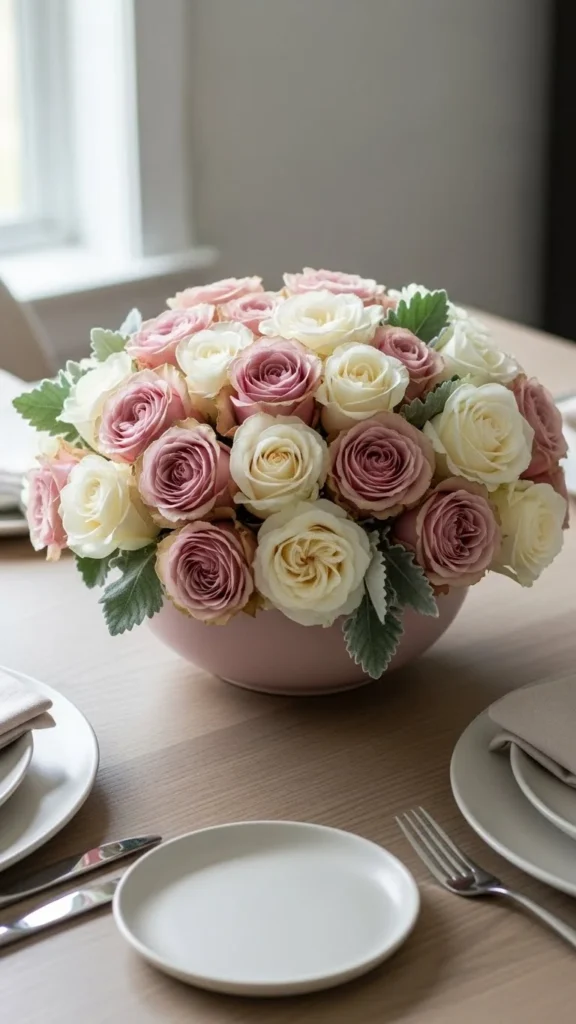
A soft neutral rose bowl works well when you want the table to feel calm and pulled together. Choose roses in pale tones like blush, cream, or dusty beige. A shallow bowl keeps sightlines open across the table. This is ideal for conversation-heavy dinners.
For a budget-friendly version, reuse a wide serving bowl you already own. Trim stems short and cluster blooms closely. Add a small amount of greenery from your yard to frame the roses. Keep water low to prevent spills.
This style pairs nicely with neutral table linens and simple place settings. It also adapts well across seasons. Swap napkin colors or chargers to change the mood without redoing the flowers. Low profile designs like this feel polished while staying approachable.
Single-Stem Rose Bud Vases
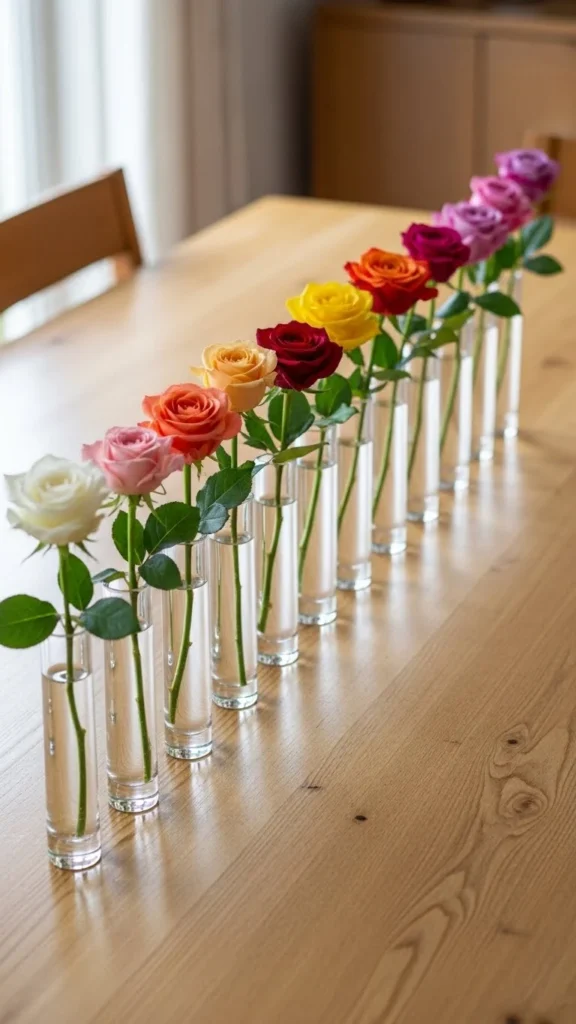
Single-stem rose bud vases create a clean and intentional look. Each guest sees a rose without the table feeling crowded. This approach works well for long tables or narrow dining spaces.
Use thrifted bottles or small jars as vases. Clear glass keeps the look light. Trim stems to the same height for consistency. Space the vases evenly down the center of the table.
This setup is easy to assemble and easy to adjust. If one bloom wilts, replace it without touching the others. It also allows you to stretch a small flower purchase across many seats. Minimal rose styling like this feels thoughtful without extra effort.
Rose Centerpiece With Mirrored Base

Using a mirrored base under a rose centerpiece adds light and visual depth without adding height or clutter. The reflection makes even a small arrangement feel more intentional and balanced. This works especially well for evening dinners or darker dining rooms.
To create this look on a budget, use a small mirror tray, a round mirror tile, or even a framed mirror with the glass exposed. Place a compact rose arrangement in a low vase or bowl at the center. Keep blooms tight and evenly spaced so the reflection looks clean.
Stick with soft rose colors and simple containers. Busy patterns can compete with the reflective surface. This idea pairs nicely with neutral linens and minimal table settings. Reflective bases help stretch simple floral arrangements while keeping the table open and easy to style.
Garden-Inspired Loose Roses
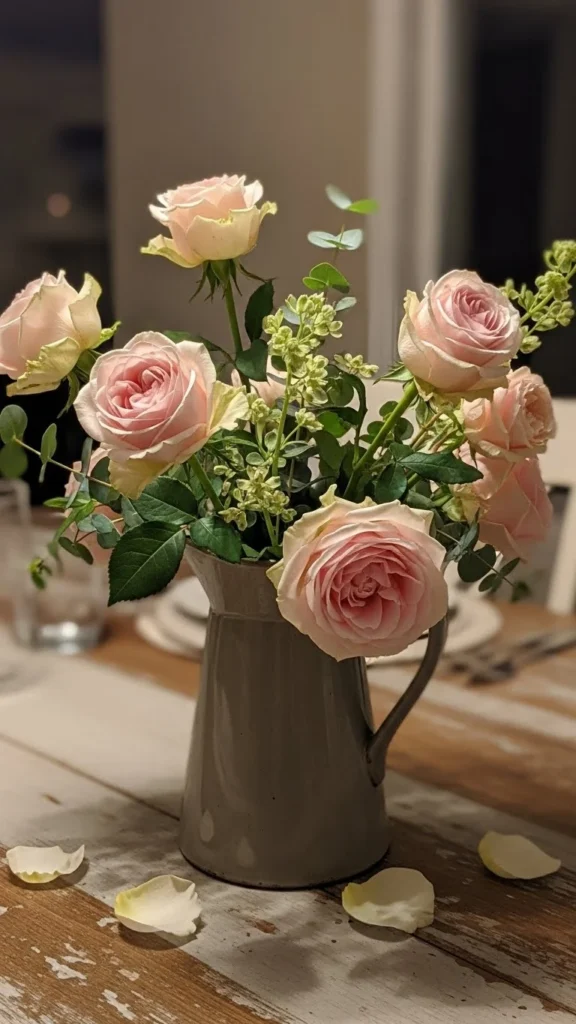
Loose garden-style roses feel casual yet refined. The goal is movement, not symmetry. Let stems lean slightly and vary bloom heights.
Use a pitcher or jug you already have. Combine roses with clipped greenery like eucalyptus or olive branches. Avoid overfilling. Space helps the flowers stand out.
This style works well for informal dinners and weekend gatherings. It feels welcoming and easygoing. Relaxed floral shapes like this reduce pressure to make everything perfect.
Monochrome Rose Arrangement
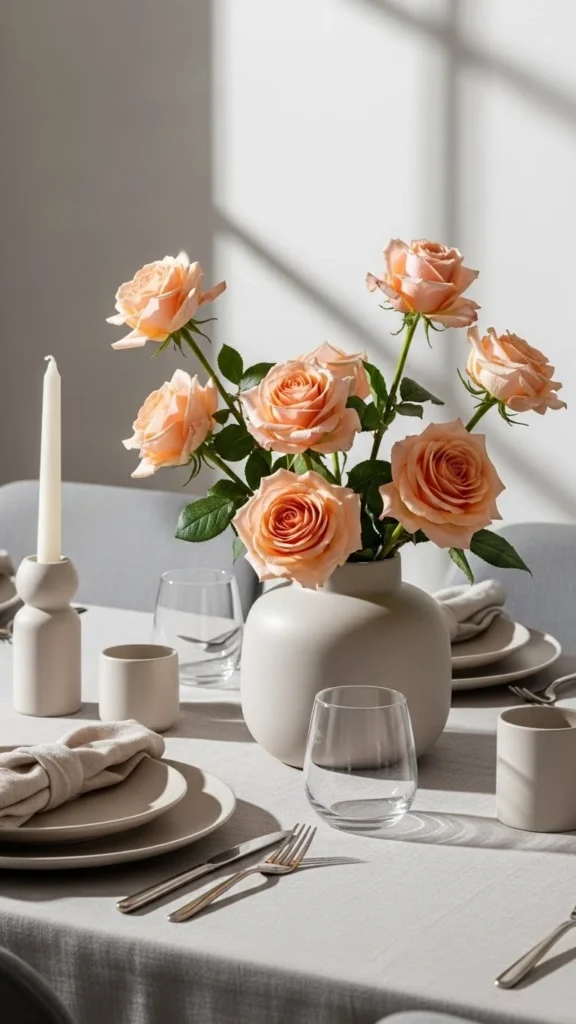
Using roses in one color creates a clean, cohesive look. Choose white, soft pink, or muted coral depending on your table setting.
A single-color arrangement looks intentional even with fewer blooms. Use repetition rather than volume. Keep the vase simple to let the roses stand out.
This approach is helpful when working with a tight budget. Fewer colors mean fewer flowers. Color-focused designs feel calm and well planned.
Vintage Teacup Rose Display
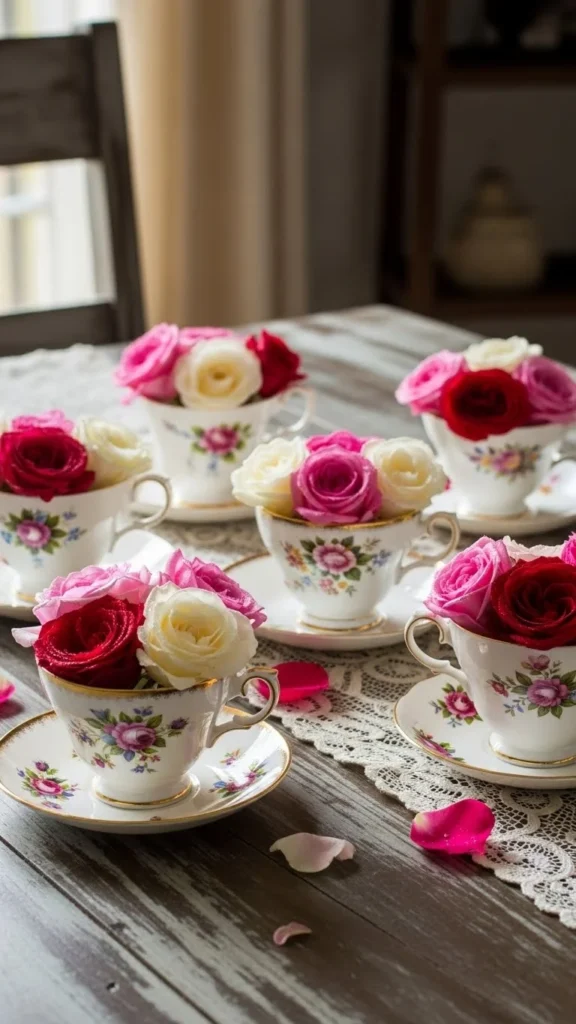
Vintage teacups add charm to rose centerpieces. Each cup can hold one or two blooms. Mix patterns while keeping colors soft.
Thrift stores are great sources for mismatched teacups. Add floral foam or a small jar inside each cup for water. Keep arrangements low.
This idea works well for brunches and intimate dinners. Repurposed tableware brings character without extra cost.
Low Wooden Box Roses
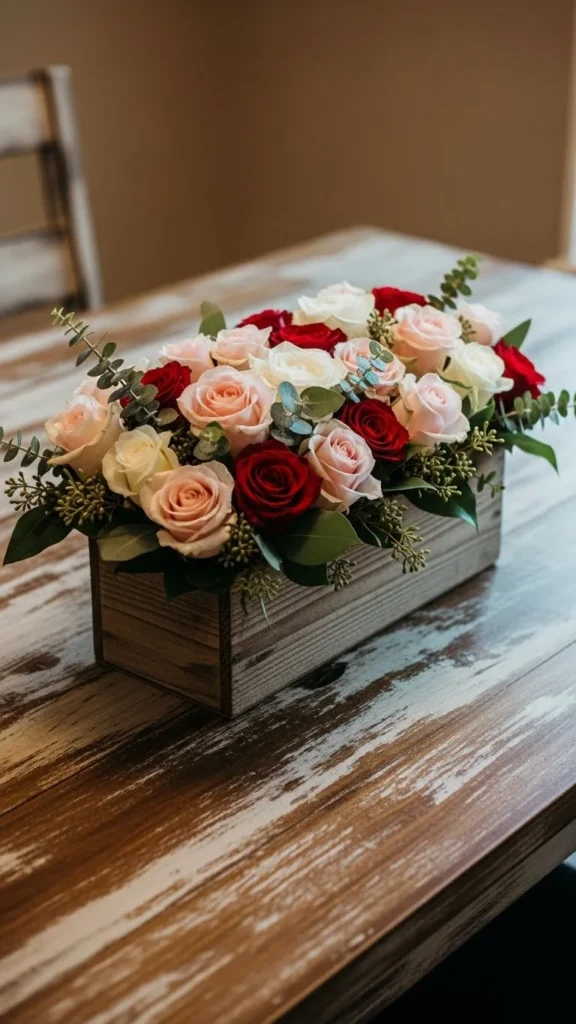
A wooden box brings warmth to rose arrangements. The contrast between wood and petals feels grounded and balanced.
Line the box with plastic and place small jars inside to hold water. Arrange roses evenly across the length. Add greenery for texture.
This style suits rustic or modern tables alike. Linear centerpieces like this work well for rectangular tables.
Floating Rose Bowl

Floating roses offer a simple visual statement. Use full blooms and remove stems. Choose a clear bowl to highlight the water and petals.
This option uses fewer flowers and sets up quickly. Replace water before guests arrive. Add subtle candles nearby for warmth.
Water-based arrangements feel calm and uncluttered.
Rose and Linen Runner Combo
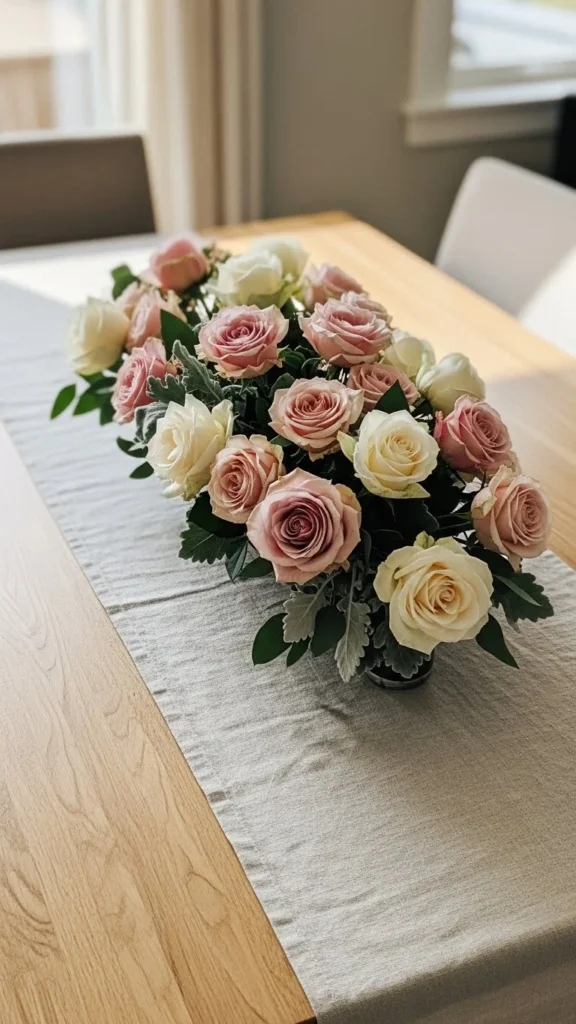
Pairing roses with a linen runner anchors the table visually. Choose a neutral runner to frame the flowers.
Place small clusters of roses along the runner rather than one large piece. This spreads interest evenly.
This approach helps long tables feel balanced. Layered table styling adds depth with simple elements.
Petite Rose Mason Jars
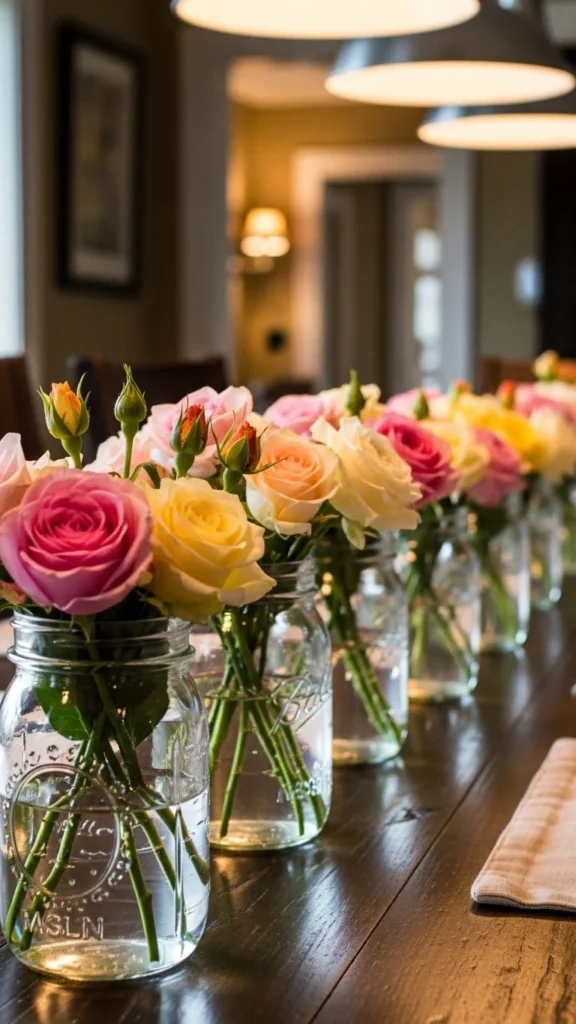
Mason jars offer a casual base for roses. Paint them matte white or leave them clear.
Use short stems and keep blooms compact. Space jars evenly for rhythm.
This idea works well for everyday dinners. Simple containers keep costs low and styling flexible.
Tall Cylinder Rose Centerpiece
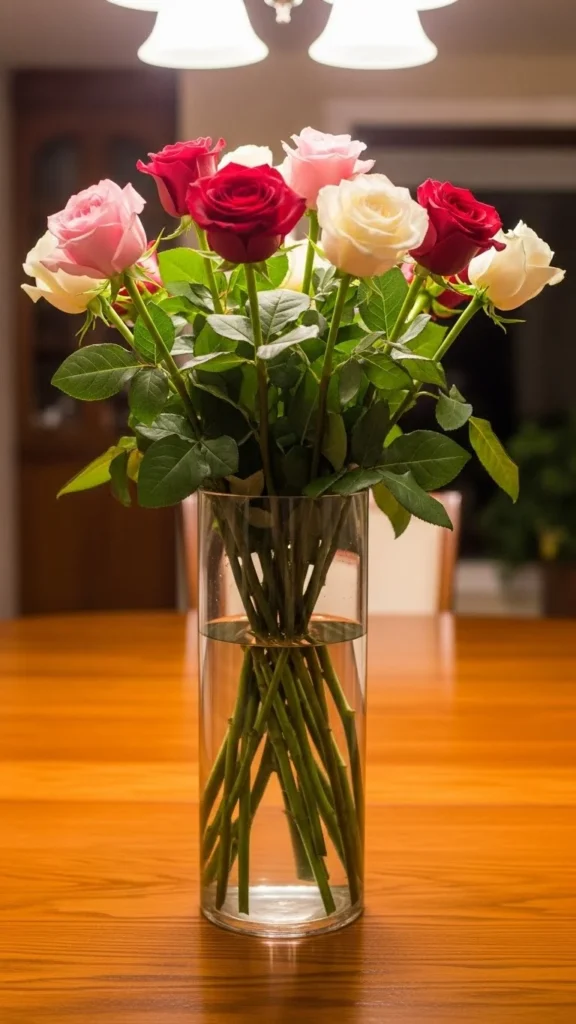
Tall rose arrangements draw the eye upward. Keep stems straight and evenly spaced.
Use fewer blooms to avoid heaviness. Make sure the base is stable.
This style suits formal dinners. Vertical designs add structure without clutter.
Rose and Greenery Garland
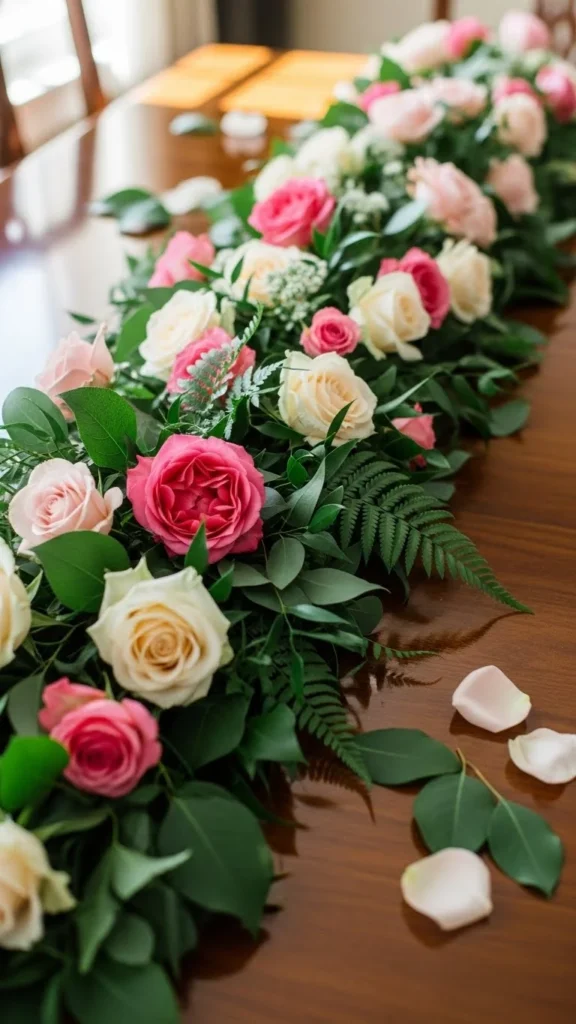
A rose garland feels abundant without requiring many blooms. Space roses between greenery sections.
Use floral wire to connect stems loosely. Lay the garland flat.
This works well for long tables. Flowing table accents guide the eye naturally.
Minimal White Rose Cluster
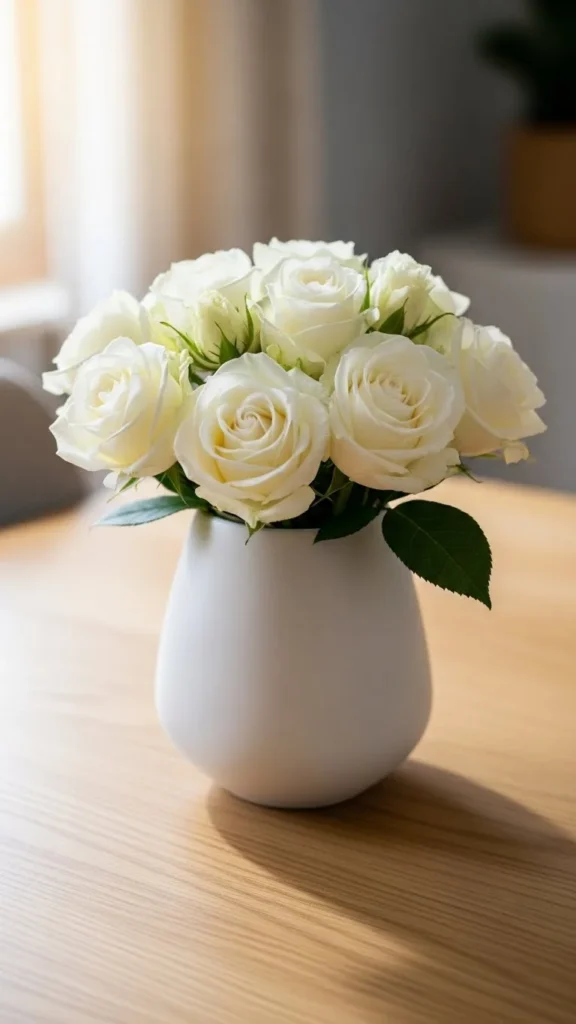
White roses create a calm focal point. Keep the arrangement tight and centered.
A small vase is enough. Trim stems evenly.
This style pairs well with patterned dishes. Clean floral groupings keep the table grounded.
Rose Trio Centerpieces
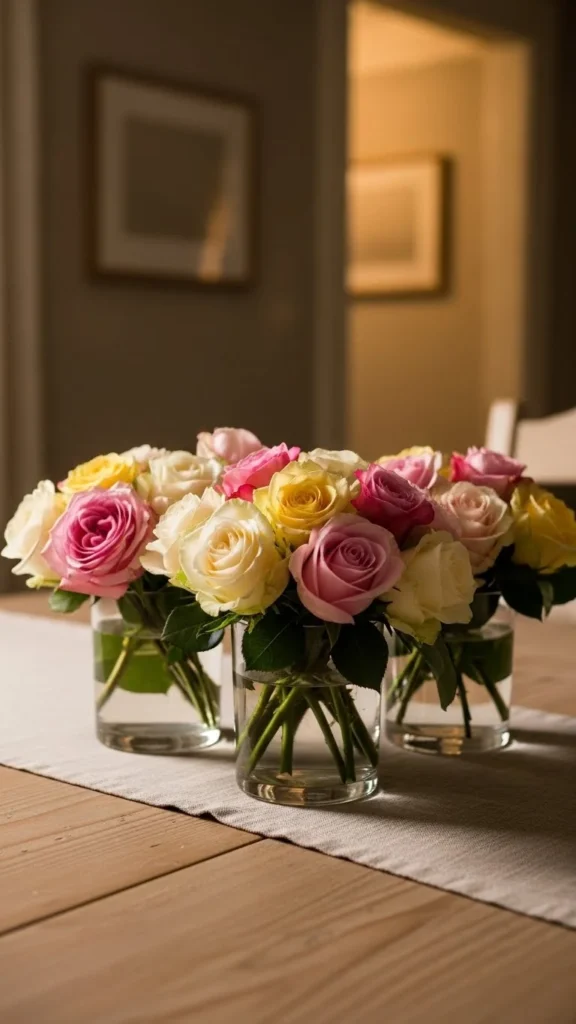
Grouping three small arrangements creates balance. Use matching containers.
Vary heights slightly. Keep colors consistent.
This approach fills space without one large piece. Grouped elements feel intentional.
Muted Rose Color Mix
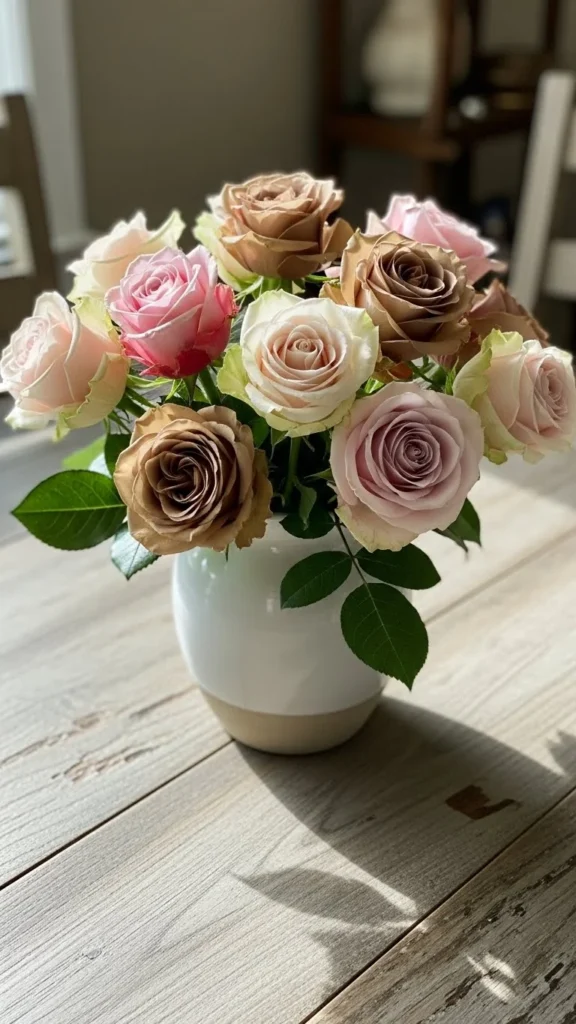
Soft mixed tones add depth. Stick to a close color range.
Avoid bright contrasts. Let shades complement.
This keeps the table cohesive. Subtle color variation adds interest.
Rose Centerpiece With Candles
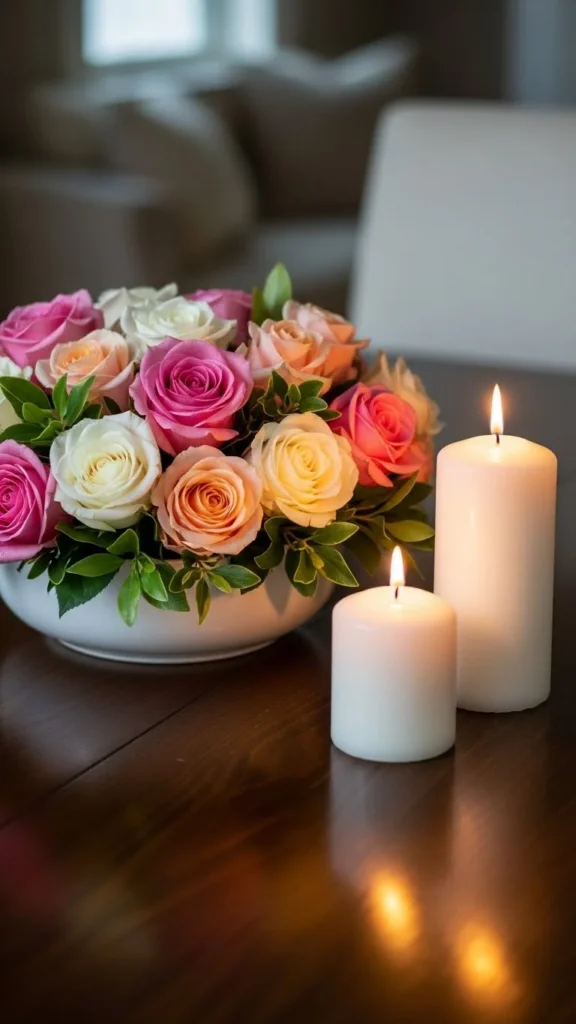
Roses paired with candles create warmth. Keep candles simple.
Space flames away from petals. Use holders of similar height.
This setup feels inviting for evening meals. Soft lighting elements enhance mood.
Compact Rose Cube Vase
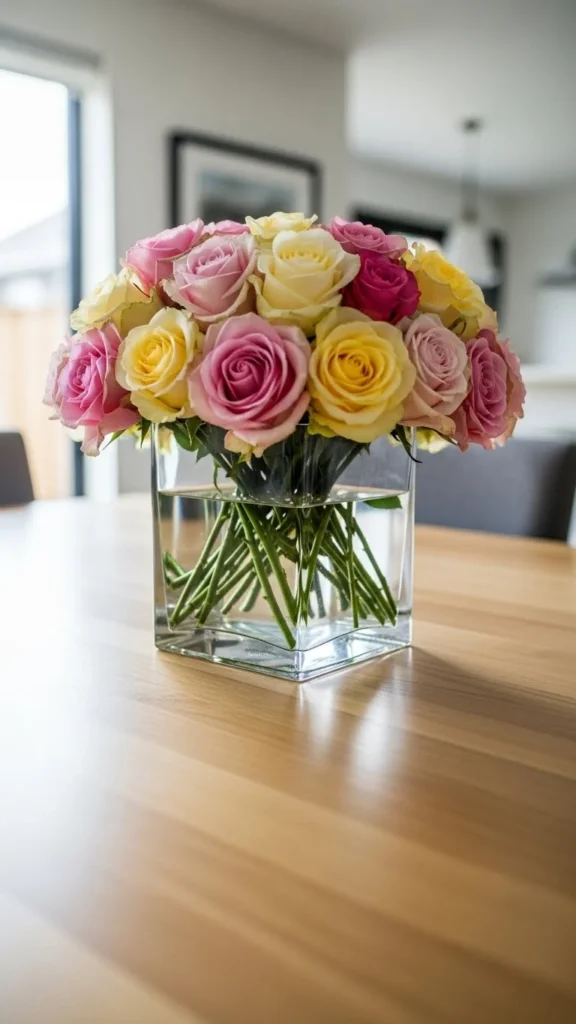
Cube vases offer structure. Pack blooms closely for a full look.
This uses fewer stems. Trim evenly.
Geometric containers add modern appeal.
Rose and Herb Mix
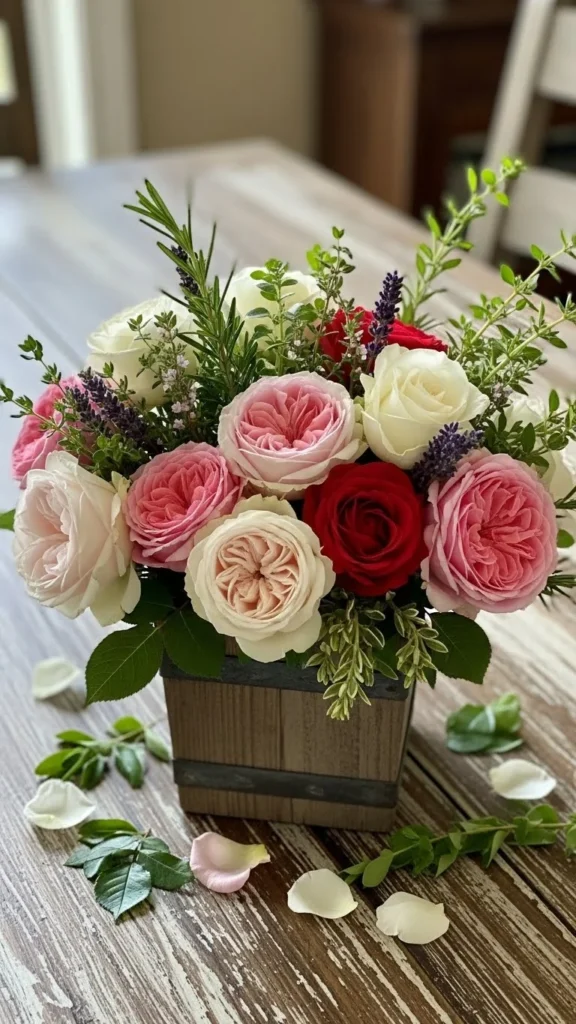
Herbs like rosemary add texture. Mix lightly with roses.
Clip herbs from your kitchen garden. Keep scents mild.
This idea feels approachable and practical. Edible greenery accents add interest.
Small Rose Ring Centerpiece
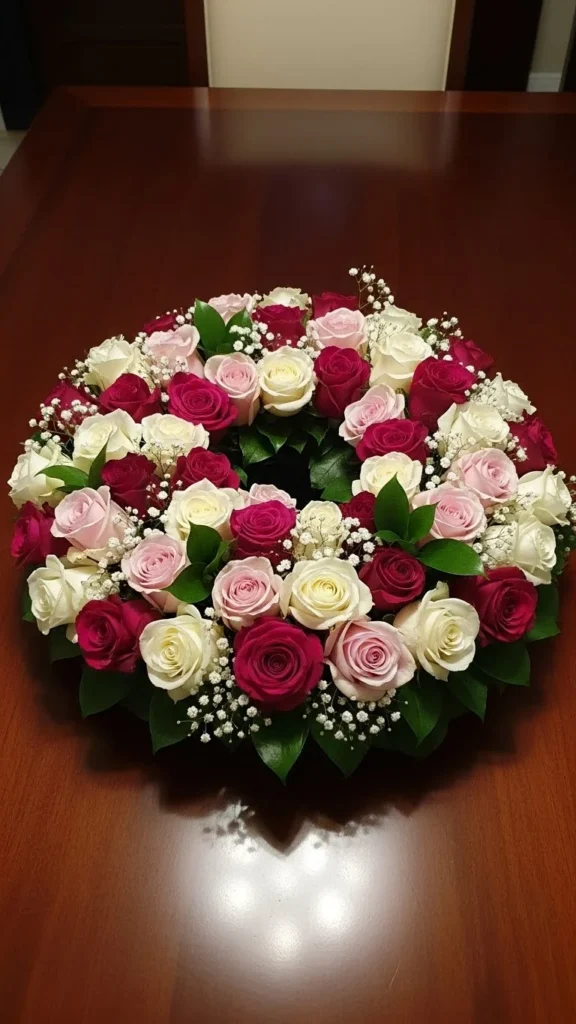
A ring shape keeps the table open. Arrange blooms around the circle.
Use floral foam for structure. Keep height low.
Circular layouts encourage conversation.
Rose in Glass Compote

Compotes lift roses slightly. This adds presence without height.
Use fewer blooms. Let glass reflect light.
Raised bases bring balance.
Seasonal Rose Accent Centerpiece
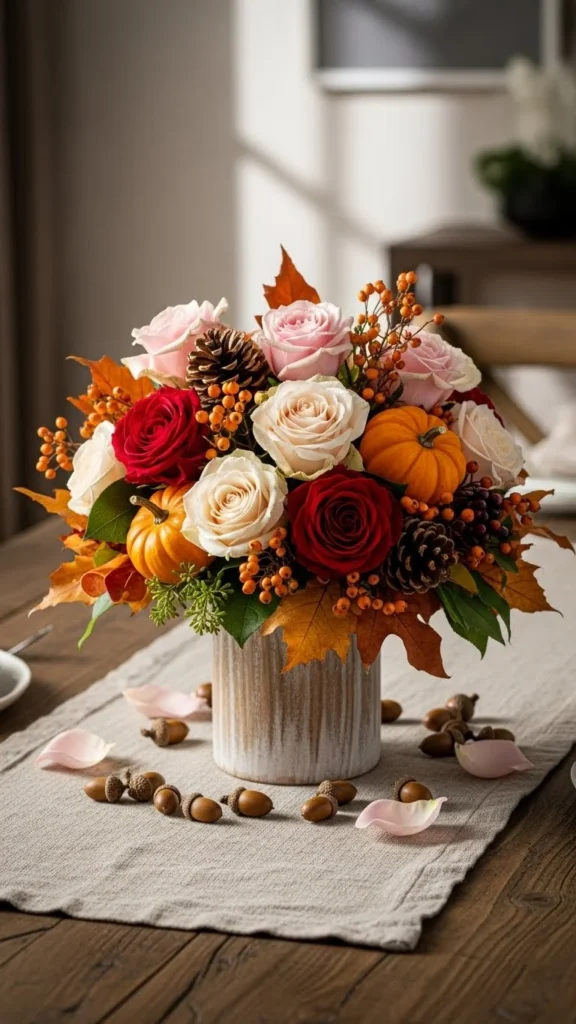
Add seasonal touches like branches or dried elements. Keep roses central.
Use items you already have. Swap accents as seasons change.
This keeps décor flexible. Adaptable styling saves effort.
Rose and Fabric Wrap Vase
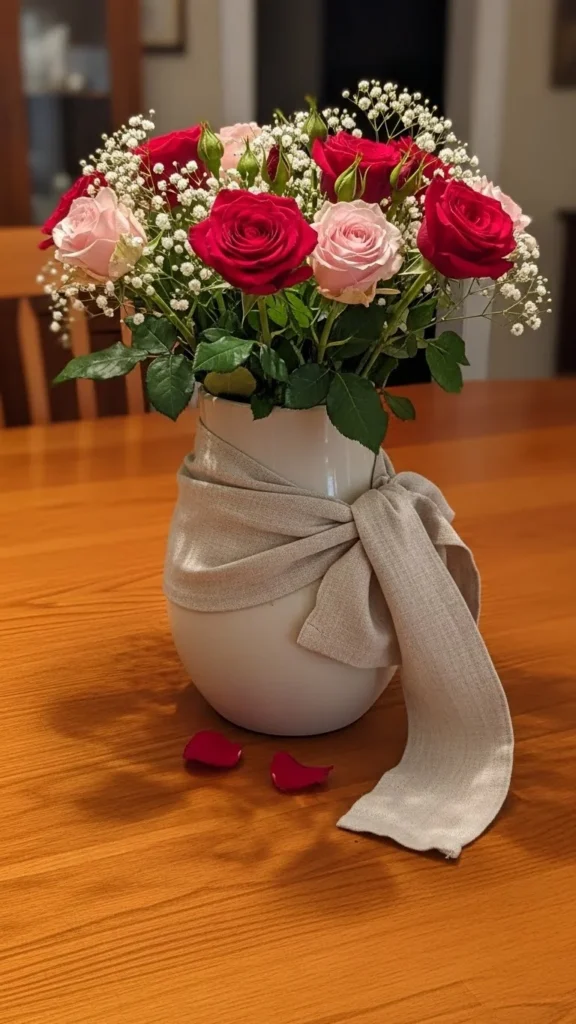
Wrap a vase with linen or gauze. Secure with twine.
This softens the look. Use neutral fabric.
Textured layers add warmth.
Petite Rose Bowl Clusters
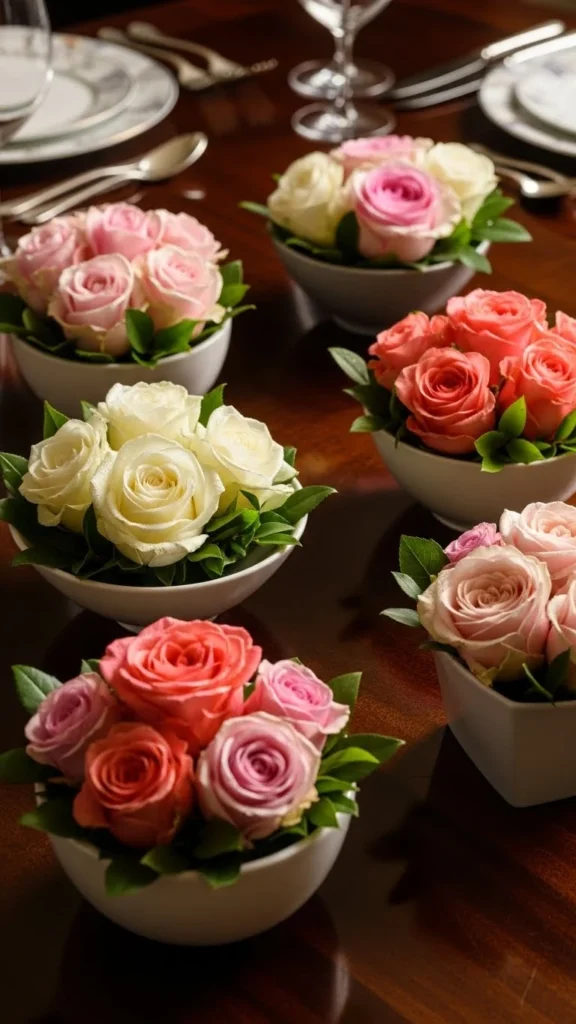
Multiple small bowls spread flowers evenly. Keep arrangements simple.
This allows flexibility. Adjust spacing easily.
Repeating small elements feel balanced.
Clear Bottle Rose Line
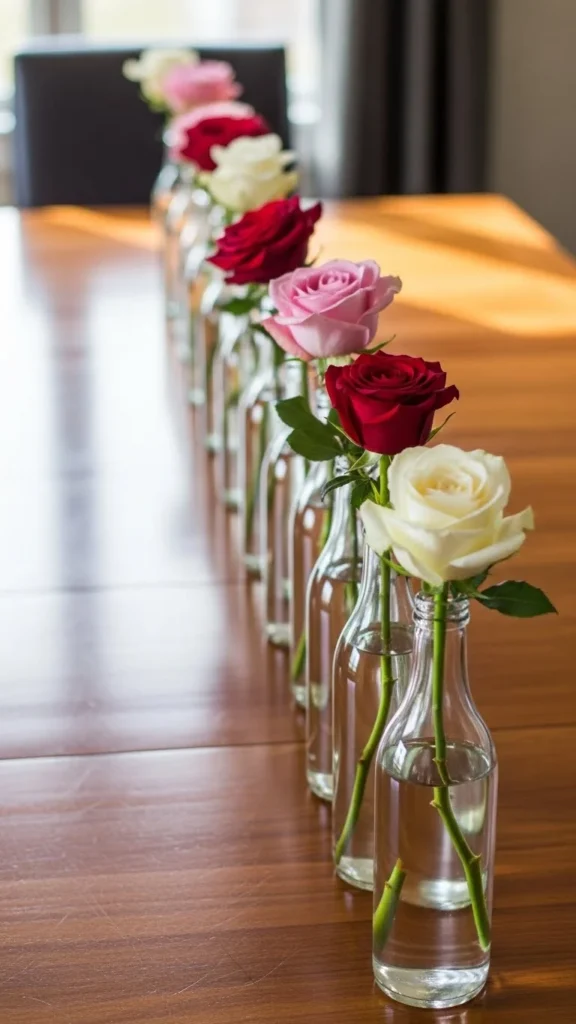
Use matching bottles for consistency. Keep stems similar height.
This works well for long tables. Linear arrangements guide the eye.
Soft Pink Rose Dome
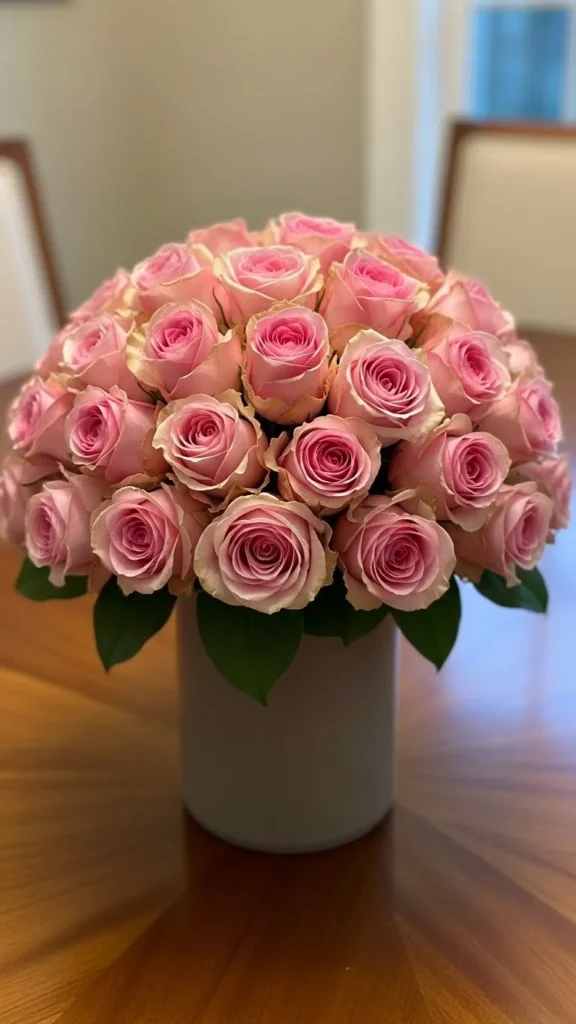
A dome shape feels classic. Keep edges rounded.
Use floral foam to shape. Trim evenly.
Traditional forms remain popular for a reason.
Rose and Stoneware Mix
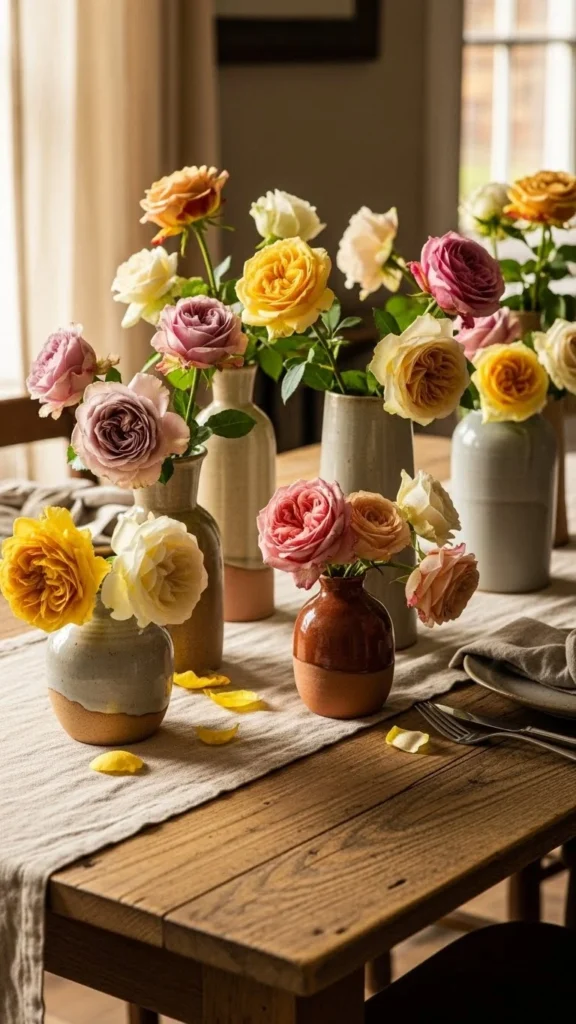
Stoneware adds texture. Pair with muted roses.
Use uneven shapes for character. Keep colors soft.
Handcrafted containers bring warmth.
Minimal Rose and Leaf Pairing
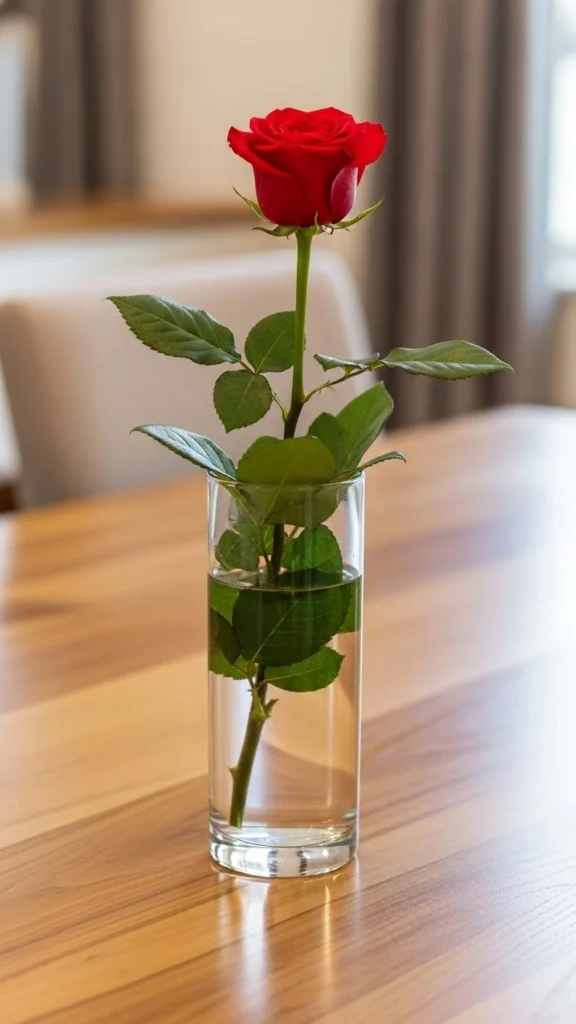
One rose and one leaf can be enough. Keep it intentional.
This uses minimal materials. Works for small tables.
Intentional simplicity keeps focus.
Conclusion
Rose centerpieces bring warmth and personality to dinner tables when styled with intention and ease. From low bowls to simple bud vases, each idea here focuses on practical steps, affordable materials, and approachable styling. Start with what you already have, keep arrangements relaxed, and let roses do the visual work. Try one idea for your next gathering and adjust as you go. Small choices can shape how your table feels and how guests experience the moment.
Leave a Reply