

Open your kitchen cabinet and—be honest—does anything tumble out? Stacked lids, mismatched containers, appliances you forgot you owned? You’re not alone. The good news: you don’t need a bigger kitchen to get more storage. You just need a smarter system.
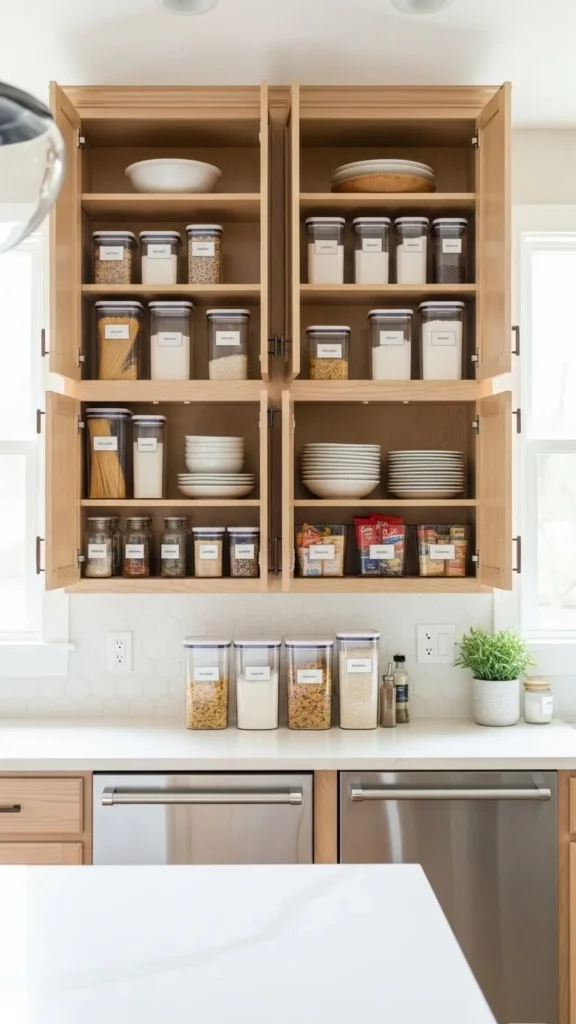
This guide walks you through simple, realistic steps to organize kitchen cabinets so everything fits better, stays visible, and is easy to grab. No fancy tools required—just practical ideas you can actually use.
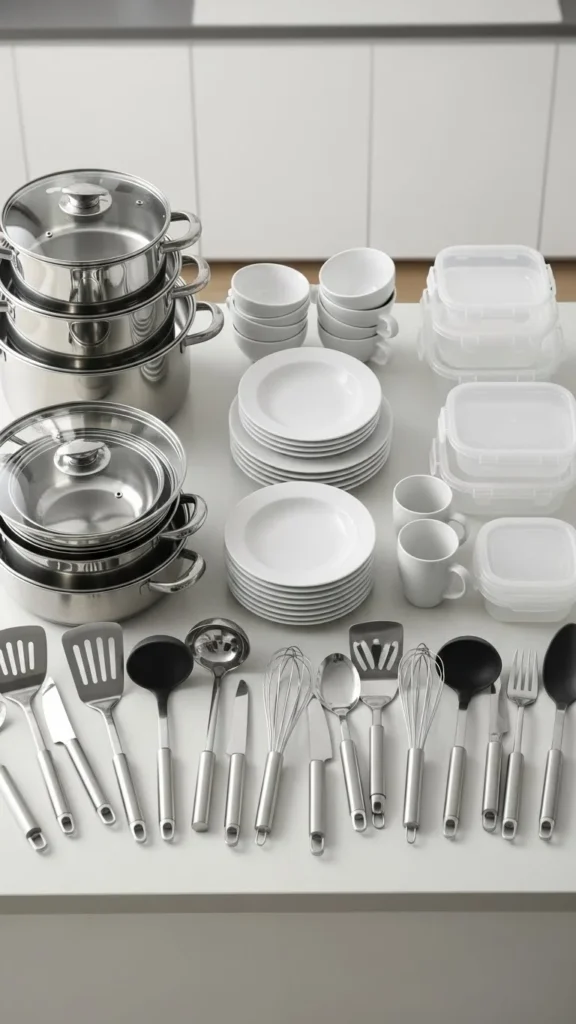
Start by Clearing Everything Out (Yes, Everything)
Before organizing, you need to see what you’re working with.
Take everything out of your cabinets and place items on the counter or table. This step feels messy, but it’s essential.
As you go, sort items into piles:
- Daily-use items
- Occasionally used items
- Rarely used or duplicate items
Be honest here. If you haven’t touched something in a year, it doesn’t deserve prime cabinet space.
Wipe shelves clean before putting anything back. A fresh surface makes the whole kitchen feel lighter and more intentional.
Group Items by How You Use Them
The secret to functional cabinets is use-based organization, not just looks.
Think in zones:
- Cooking zone: pots, pans, cooking tools
- Prep zone: mixing bowls, cutting boards
- Storage zone: dry goods, containers
- Serving zone: plates, bowls, platters
Keep items you use together stored together. This cuts down on searching and keeps cabinets from becoming cluttered again.
Use Shelf Risers to Double Vertical Space
Most cabinets waste vertical space. Shelf risers fix that instantly.
They’re perfect for:
- Plates and bowls
- Mugs and cups
- Pantry items
By stacking upward instead of outward, you can often double what fits on one shelf.
Choose sturdy risers in metal or wood for heavier items. Clear acrylic works well if you want a lighter visual look.
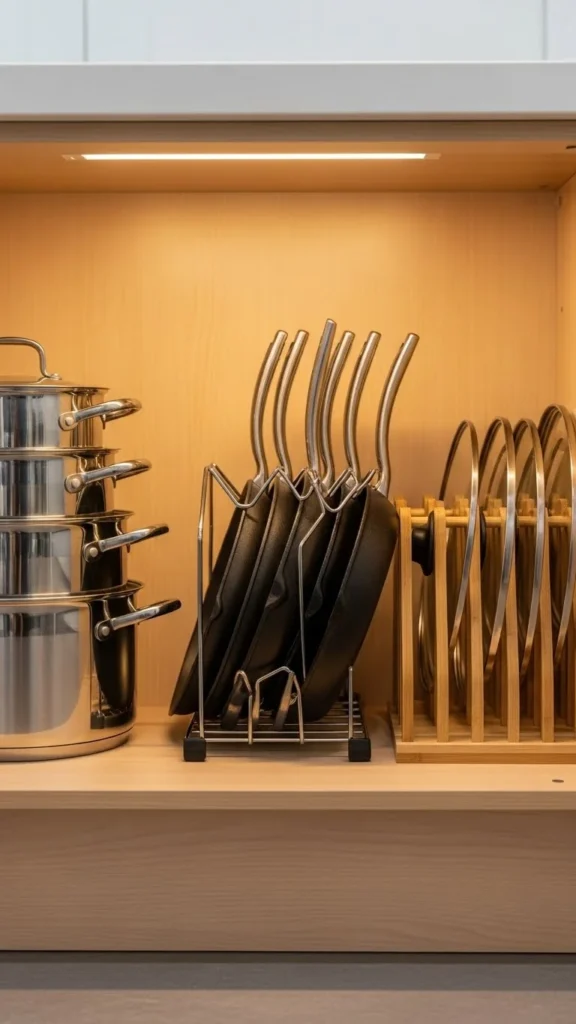
Store Pots, Pans, and Lids Separately
Nesting everything together may seem logical—but it’s often why cabinets feel chaotic.
Try this instead:
- Stack pots by size
- Store lids vertically using a rack or file organizer
- Place pans on their side if space allows
This makes every item accessible without lifting five others first.
Turn Deep Cabinets Into Easy-Access Zones
Deep cabinets are storage gold—if you can actually reach what’s inside.
Use:
- Pull-out bins
- Slide-out drawers
- Stackable baskets
Store less-used items toward the back and everyday items up front. Clear bins work especially well because you can see what’s inside without digging.
Labeling helps here, even if labels face inward. It keeps everything returning to its proper place.
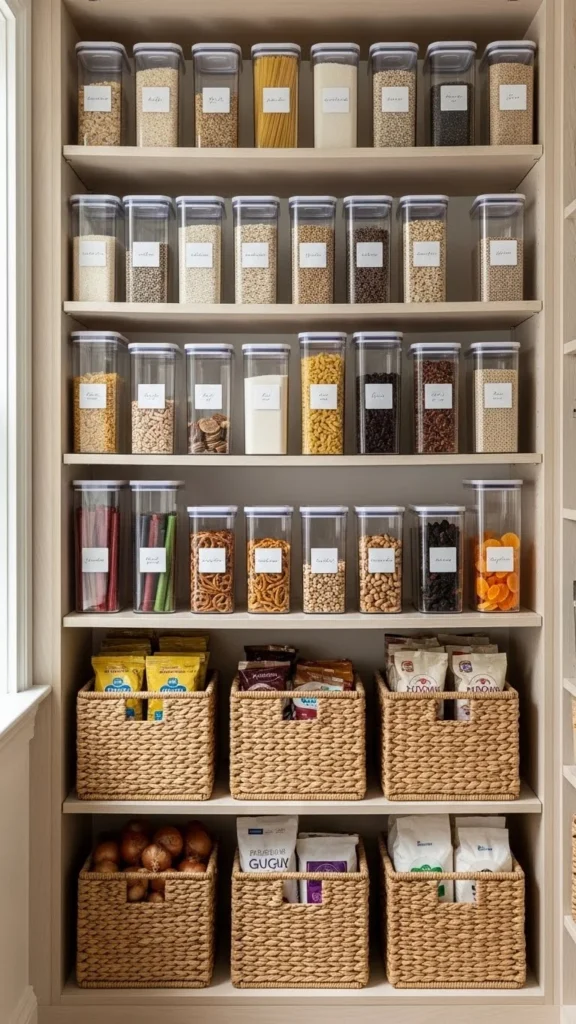
Organize Pantry Cabinets Like a Store Display
When food storage is visible, waste goes down and space goes up.
Transfer dry goods into:
- Clear containers
- Stackable jars
- Uniform bins
Group items like:
- Baking supplies
- Snacks
- Breakfast items
Keep taller items at the back and shorter ones in front so nothing gets lost.
Make Use of Cabinet Doors
Cabinet doors are often ignored—but they’re prime real estate.
Add:
- Slim racks for wraps and bags
- Hooks for measuring cups
- Small bins for spices or packets
Just make sure nothing prevents the door from closing properly. Lightweight items work best.
Create a Simple Maintenance Routine
Organization only works if it’s easy to maintain.
Try this:
- Do a quick cabinet reset once a month
- Return items to their zones daily
- Reassess when something stops fitting
If a cabinet starts feeling crowded again, it’s usually a sign something needs to be removed—not rearranged.
Final Takeaway
You don’t need perfect cabinets—you need functional ones. By using zones, vertical space, and smart organizers, you can make even the smallest kitchen feel calm and spacious.
Start with one cabinet today. You’ll be surprised how motivating that first win can be.
Save this guide for later and come back whenever your cabinets need a refresh!

Leave a Reply