

There’s something instantly uplifting about stepping into a kitchen filled with fresh greenery. A kitchen herb garden isn’t just practical—it brings warmth, life, and a sense of calm to your cooking space. Even better? You don’t need a big home or outdoor space to make it work. With the right setup, herbs can thrive right where you cook.
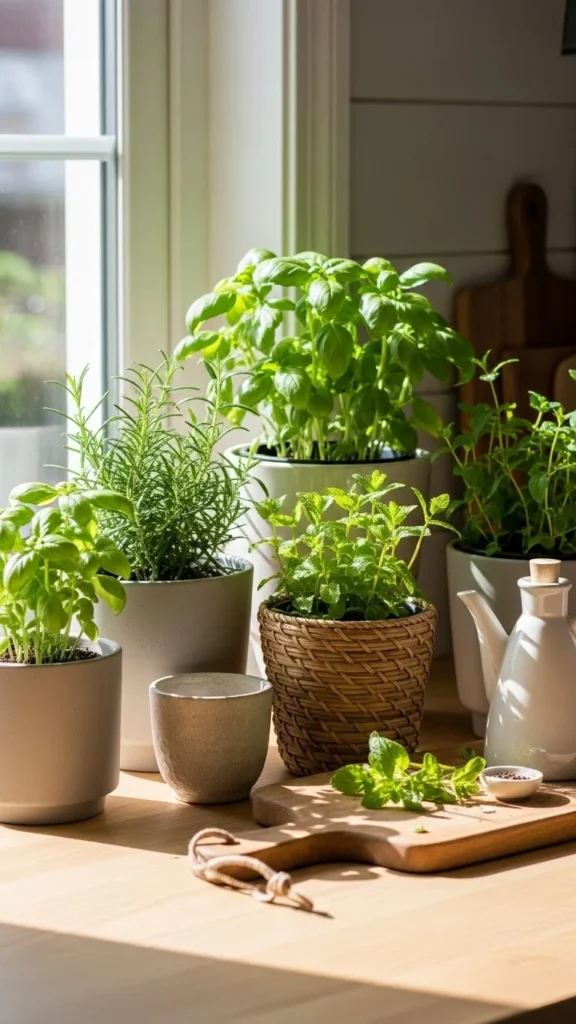
Whether you’re snipping fresh leaves for dinner or simply enjoying the look of living plants, a kitchen herb garden blends beauty with everyday function. Let’s walk through how to create one that feels intentional, stylish, and easy to maintain.
Choose the Right Spot for Healthy Herbs
Location is everything when it comes to growing herbs indoors. Most herbs love light, warmth, and a bit of airflow.
Look for these conditions:
- A sunny windowsill with 4–6 hours of daylight
- A countertop near a window, but away from heat vents
- A shelf with good natural light
If your kitchen doesn’t get much sun, don’t worry. A slim grow light mounted under cabinets can make a big difference without ruining the look of your space.
Quick tip:
Rotate your herb pots every few days so they grow evenly and don’t lean toward the light.
A well-placed herb garden should feel effortless—not like it’s competing with your kitchen layout.
Pick Herbs You’ll Actually Use
It’s tempting to grow everything, but the most practical herb gardens focus on plants you cook with often. This keeps maintenance simple and prevents overcrowding.
Beginner-friendly kitchen herbs include:
- Basil
- Mint
- Parsley
- Chives
- Thyme
- Oregano
Start with three to five herbs. This gives you variety without turning your counter into a jungle.
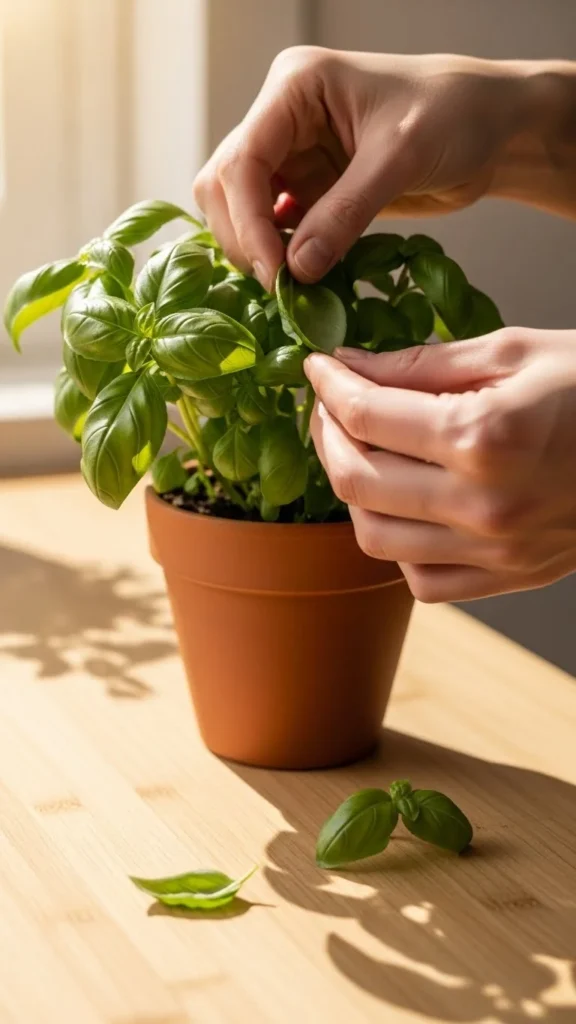
Pro tip:
Mint grows fast and spreads easily. Keep it in its own pot so it doesn’t take over.
Select Containers That Match Your Kitchen Style
Herb pots double as decor, so choose containers that blend with your kitchen’s overall look.
Popular style options:
- White ceramic pots for modern kitchens
- Terracotta for a warm, rustic feel
- Matte black or gray planters for a sleek look
- Glass jars placed inside cache pots for a clean aesthetic
Make sure every container has drainage holes. If not, place herbs in nursery pots and set them inside decorative containers.
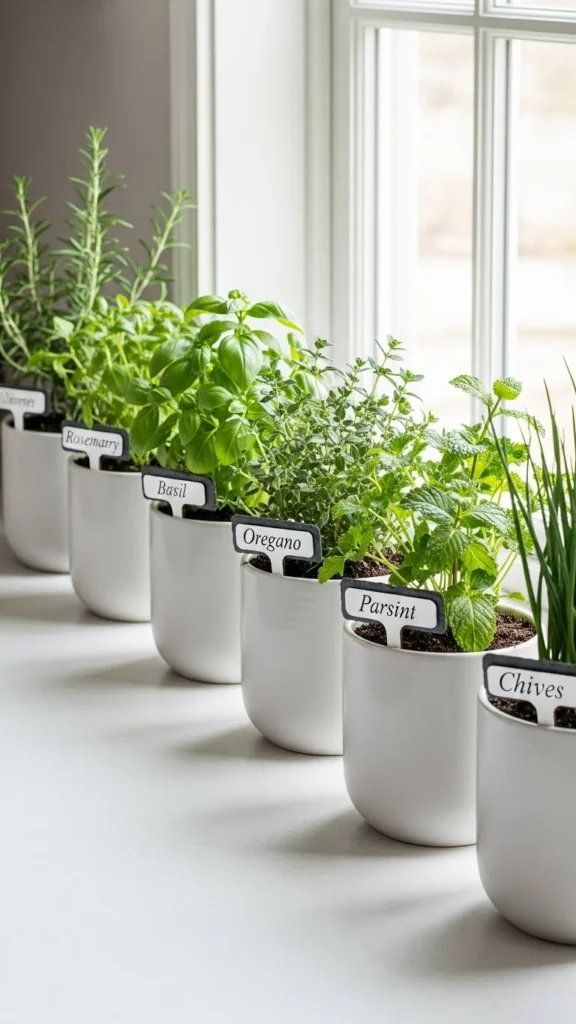
Grouping herbs in matching containers instantly makes your setup feel organized and intentional.
Use Vertical Space to Save Counter Room
Short on counter space? Go vertical. This is where style and practicality really meet.
Smart vertical ideas:
- Wall-mounted shelves with trailing herbs
- Hanging planters near windows
- Tiered plant stands for corners
- Magnetic planters on the fridge
Vertical gardens keep herbs within reach while freeing up prep space.
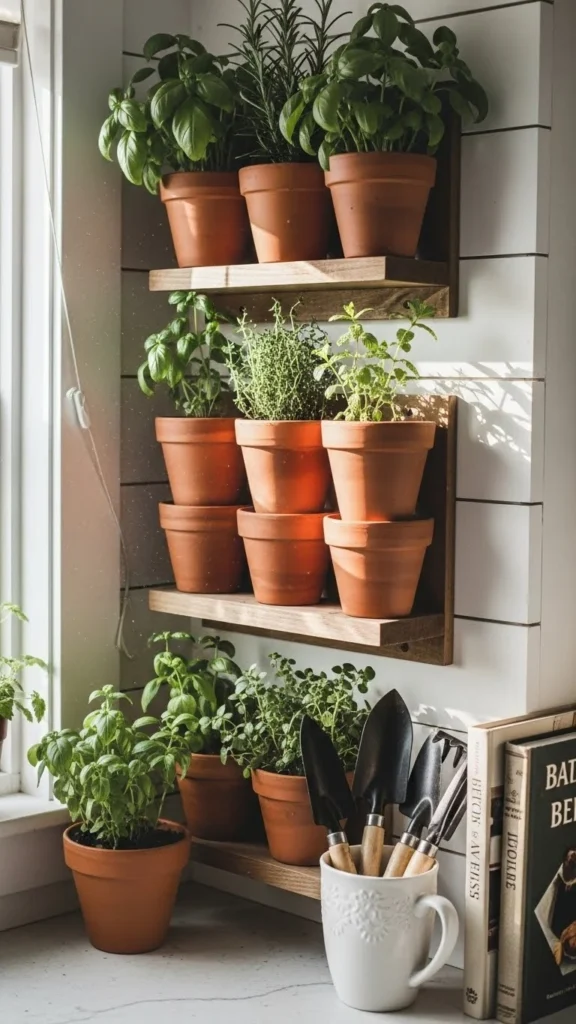
Keep frequently used herbs at eye level. Decorative or slower-growing plants can go higher up.
Keep Care Simple and Consistent
Herbs thrive on routine. Once you get into a rhythm, caring for them becomes second nature.
Easy care basics:
- Water when the top inch of soil feels dry
- Avoid soaking roots—less is more
- Trim herbs regularly to encourage growth
- Remove yellowing leaves promptly
Set a gentle reminder if needed, especially during the first few weeks.
Extra tip:
Harvest herbs from the top, not the base. This helps the plant grow fuller instead of leggy.
Make Your Herb Garden Part of Your Kitchen Routine
The best kitchen herb gardens don’t feel decorative-only—they’re used daily. Keep scissors nearby, place herbs close to your prep area, and enjoy adding fresh flavor while you cook.
A stylish herb garden:
- Enhances your kitchen’s look
- Makes cooking feel more intentional
- Encourages fresh, home-style meals
- Adds life to even the smallest space
Once you start using your herbs regularly, they’ll quickly become one of your favorite kitchen features.
Final Takeaway
Creating a kitchen herb garden is one of the easiest ways to combine beauty and function in your home. Start small, choose herbs you love, and let your kitchen grow greener one plant at a time.
Save this idea for later and start your herb garden this week—you’ll wonder how you ever cooked without it.

Leave a Reply