

There’s something instantly comforting about a rustic kitchen. It feels lived-in, welcoming, and full of quiet character—like a place where slow mornings and shared meals naturally happen. The secret to getting it right isn’t piling on décor. It’s about layering natural textures, warm tones, and simple details that feel authentic rather than staged.
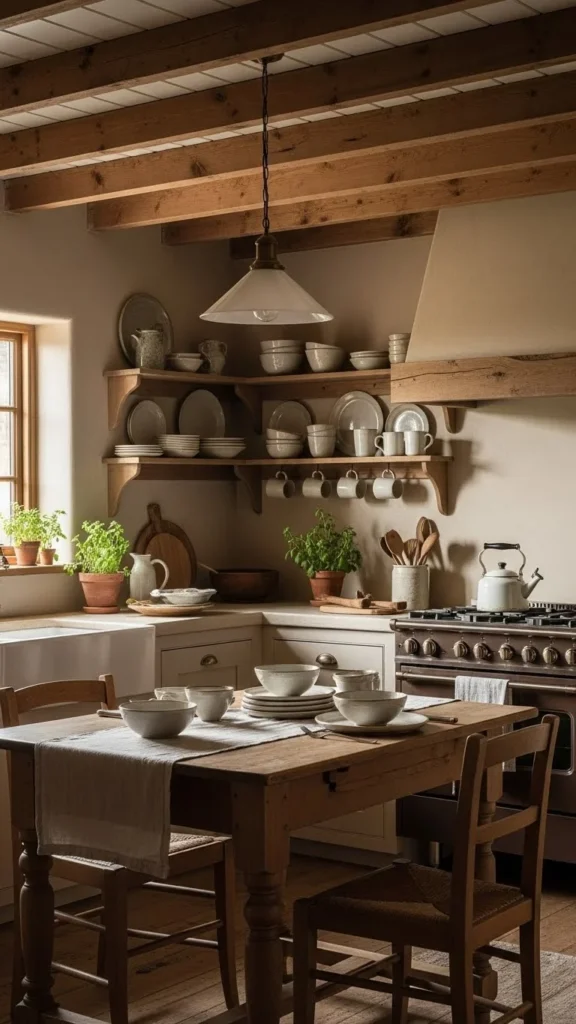
Below, you’ll find easy, practical ways to bring natural warmth into your kitchen without overthinking it or overspending.
Start With Warm, Natural Materials
Rustic style always begins with materials that feel real and grounded. If your kitchen already has some of these elements, lean into them instead of covering them up.
Focus on:
- Wood: butcher-block countertops, open shelves, or a simple wooden island
- Stone or brick: backsplashes, accent walls, or textured floors
- Metal with patina: brushed brass, aged iron, or matte black hardware
If a full renovation isn’t in the cards, small changes still matter. Swapping cabinet hardware or adding a wood shelf instantly softens the space.
Choose a Soft, Earthy Color Palette
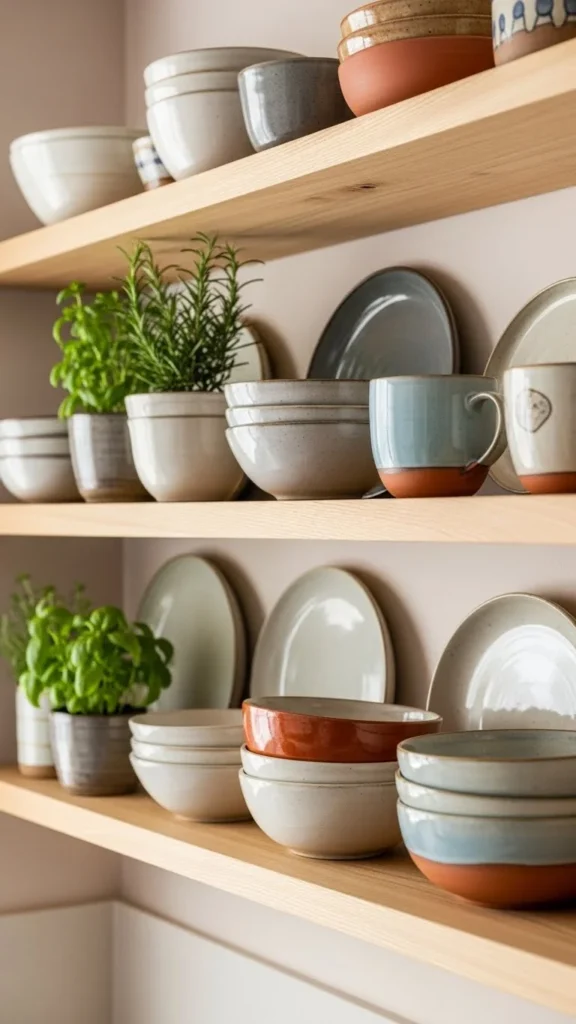
Rustic kitchens feel calm because their colors are inspired by nature. Instead of bright whites or stark contrasts, aim for tones that feel sun-warmed and relaxed.
Great rustic color choices include:
- Warm whites and creamy off-whites
- Soft beige, sand, and taupe
- Muted greens inspired by herbs
- Clay, terracotta, and soft brown accents
You don’t need to repaint everything. Even introducing these shades through textiles, pottery, or wall art can shift the mood.
Tip: Keep the base neutral and layer color slowly. Rustic warmth builds over time.
Layer Texture With Everyday Details
Texture is what makes a rustic kitchen feel inviting rather than flat. Think in layers, starting with the largest surfaces and moving toward small accents.
Add texture through:
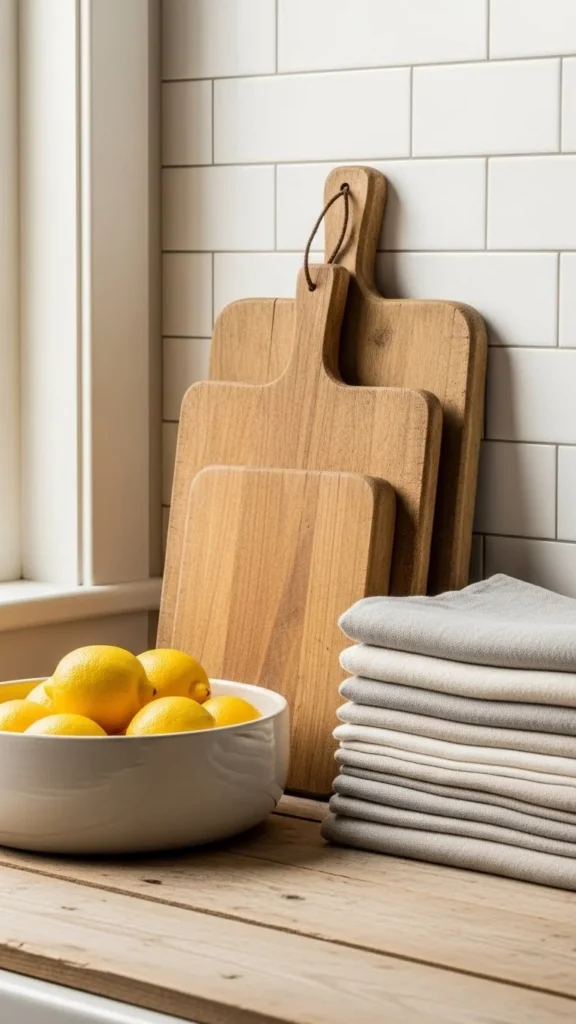
- Linen or cotton dish towels
- Woven baskets for storage
- Hand-thrown ceramic bowls
- Wooden cutting boards leaned against the backsplash
These pieces should look useful, not precious. The charm comes from items that feel touched and used.
Use Open Shelving to Tell a Story
Open shelving is a natural fit for rustic kitchens because it shows personality without feeling cluttered. The key is restraint.
Style shelves with:
- Neutral dishware in small stacks
- A mix of heights and shapes
- One or two natural accents, like a small plant or pottery piece
Leave breathing room between items. A shelf that feels slightly imperfect often looks more authentic than one that’s overly styled.
Pro tip: Stick to a limited color range to keep shelves calm and cohesive.
Bring in Warm, Ambient Lighting
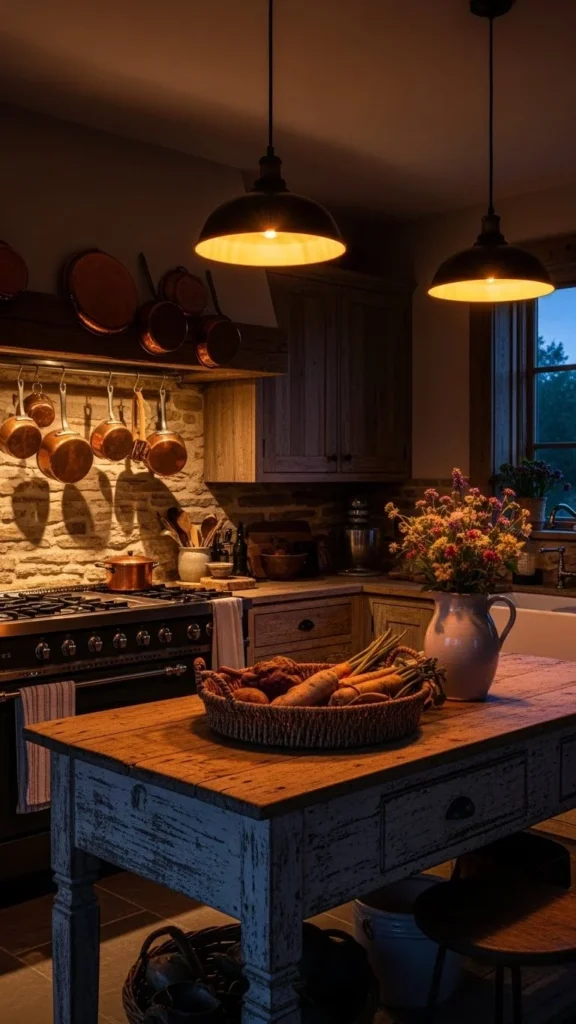
Lighting can make or break a rustic kitchen. Harsh overhead lights flatten the space, while warm lighting creates instant comfort.
Look for:
- Pendant lights with simple shapes
- Soft-glow bulbs rather than bright white
- Under-shelf lighting for gentle evening warmth
If possible, let natural light take the lead during the day. Keep window treatments light and minimal so sunlight can highlight textures and wood grain.
Decorate With Practical, Rustic Accents
In a rustic kitchen, décor should earn its place. Choose pieces that are both beautiful and useful.
Easy ideas:
- A ceramic utensil crock on the counter
- A wooden tray to corral oils and spices
- Stoneware jars for pantry staples
- A simple runner made from natural fibers
Avoid trendy items that feel mass-produced. Rustic spaces shine when they feel collected over time.
Keep It Imperfect and Personal
Rustic kitchens aren’t about perfection. Small marks, uneven textures, and subtle wear add warmth and soul.
Embrace:
- Slightly mismatched chairs
- Handmade or vintage-inspired items
- Natural aging of materials
If something feels too polished, soften it with fabric, wood, or greenery. The goal is a kitchen that feels welcoming, not showroom-ready.
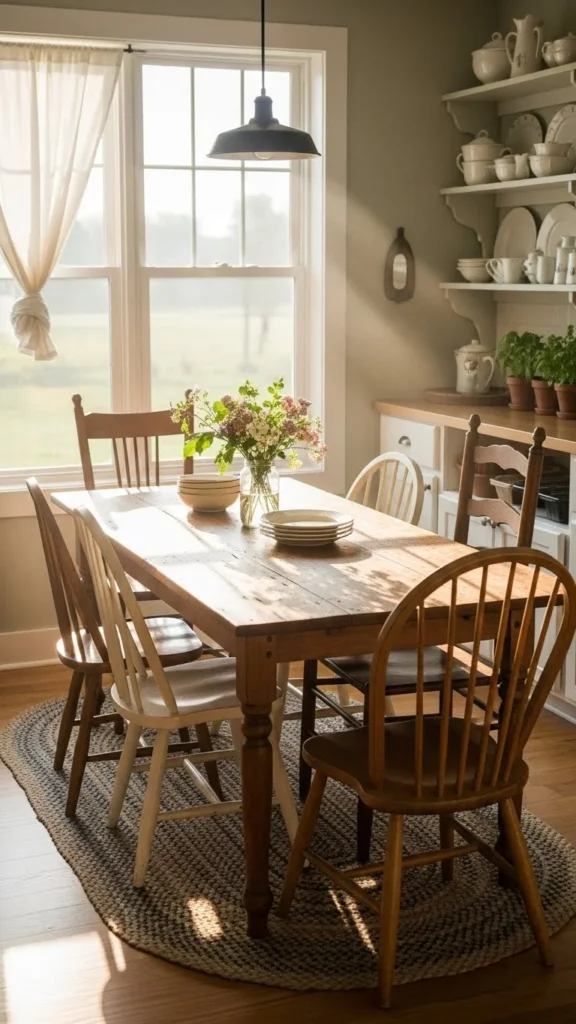
Final Takeaway: Let Warmth Build Naturally
Decorating a rustic kitchen isn’t about following strict rules. It’s about choosing materials and details that feel honest, comfortable, and grounded in nature. Start small, layer slowly, and let the space evolve.
When your kitchen feels like a place you want to linger, you’re doing it right.
Save this guide for later and revisit it as your rustic kitchen comes together, one warm detail at a time.

Leave a Reply