

A kitchen can look beautiful and still feel frustrating to use. If you’re constantly crossing paths, reaching too far, or juggling tasks in tight corners, the layout is usually the problem—not you. A smart kitchen layout supports how you actually move, cook, and clean. When workflow improves, everything feels easier, faster, and calmer.
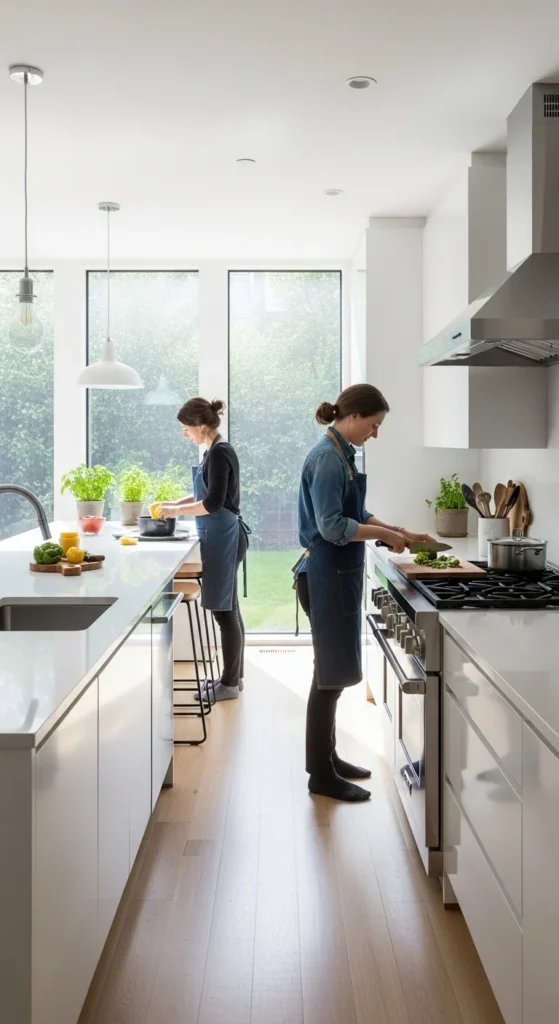
Below is a step-by-step guide to designing a kitchen layout that works with you, not against you.
Start With Your Daily Kitchen Habits
Before thinking about cabinets or finishes, think about how you use your kitchen.
Ask yourself:
- Do you cook full meals most days or keep things simple?
- Do multiple people cook at the same time?
- Do you entertain guests while cooking?
Your answers shape everything else. A busy family kitchen needs different flow than a compact apartment kitchen.
Quick tip:
- Walk through your usual cooking routine.
- Notice where you pause, turn, or backtrack.
- Those moments highlight layout problems.
Designing around real habits always beats copying a picture-perfect kitchen that doesn’t match your life.
Understand the Core Work Zones
Every efficient kitchen is built around key zones. These zones reduce wasted steps and keep tasks grouped logically.
The main zones are:
- Prep zone: counter space near the sink
- Cooking zone: stove, oven, nearby tools
- Cleaning zone: sink, dishwasher, trash
- Storage zone: pantry, fridge, cabinets
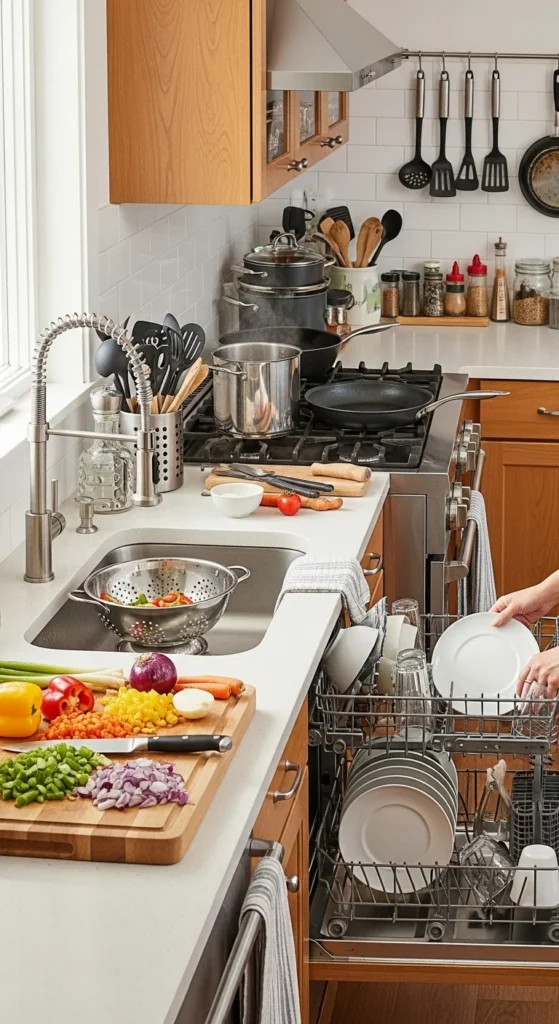
Keep related items close together. For example:
- Store cutting boards near prep space
- Keep pots and pans near the stove
- Place cleaning supplies under the sink
When zones flow naturally, the kitchen feels intuitive instead of chaotic.
Choose a Layout That Fits Your Space
There’s no single “best” layout. The right choice depends on room size and traffic patterns.
Popular layout options:
- Galley: Great for small spaces and focused cooking
- L-shape: Flexible and open, works well for families
- U-shape: Maximum storage and counter space
- Island layout: Ideal for prep, seating, and shared tasks
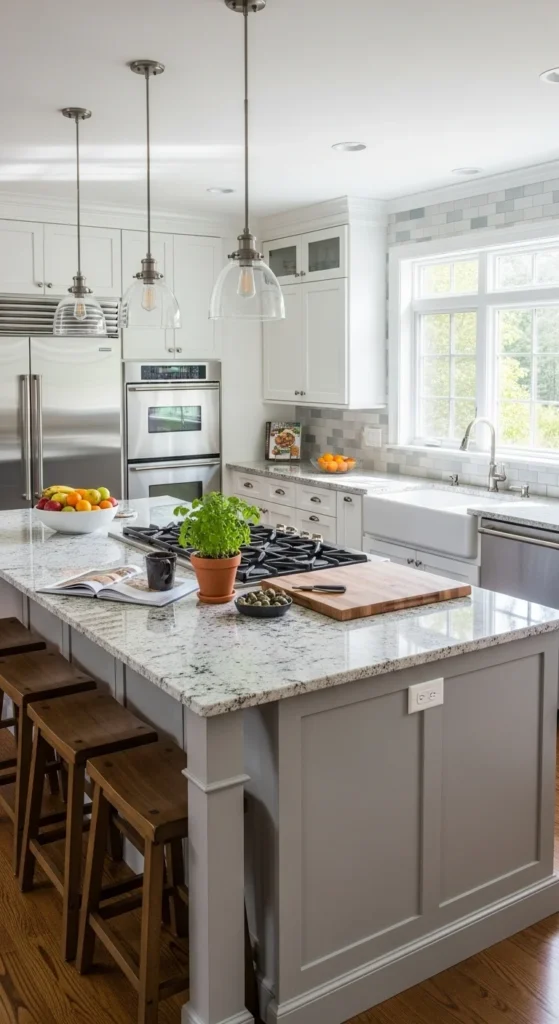
Layout tips that improve flow:
- Keep walkways at least 36 inches wide
- Avoid placing appliances where doors collide
- Make sure one person can pass another easily
A layout should guide movement, not block it.
Reduce Steps With Smart Appliance Placement
Appliances should support a smooth sequence of tasks.
Think in order:
- Take food from the fridge
- Wash at the sink
- Prep on the counter
- Cook on the stove
If these are too far apart, every meal feels like extra work.
Helpful placement tips:
- Put the fridge near the kitchen entrance
- Place the dishwasher next to the sink
- Leave landing space beside every major appliance
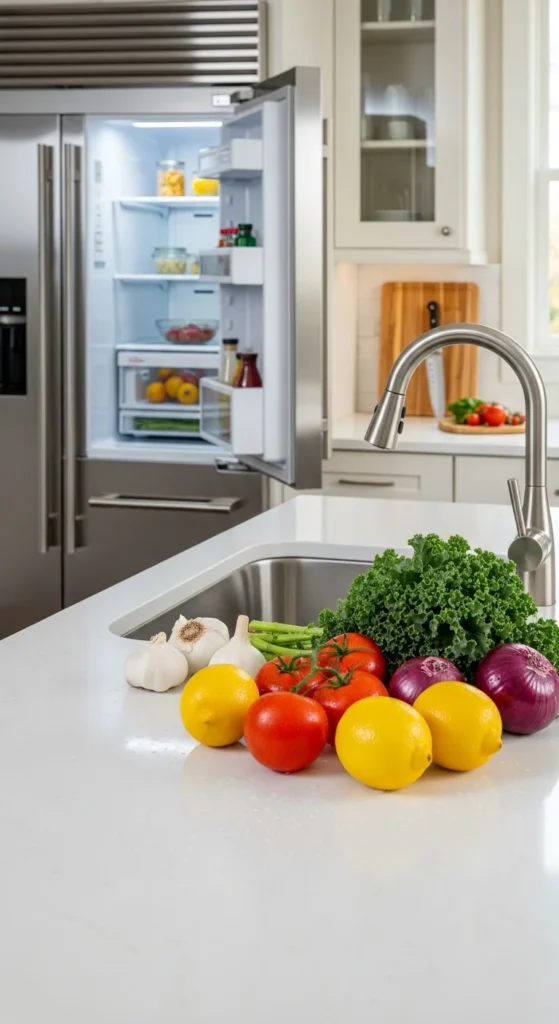
Small adjustments in placement can save hundreds of steps every week.
Use Storage to Support Workflow
Good storage isn’t just about fitting more items. It’s about storing items where you use them.
Smart storage ideas:
- Drawers instead of deep cabinets
- Pull-out shelves for lower cabinets
- Vertical dividers for trays and lids
Keep everyday items at arm level. Reserve higher or lower spots for rarely used tools.
Workflow-friendly rule:
- If you use it daily, it should be one step away.
- If you use it weekly, two steps is fine.
This simple rule keeps your kitchen clutter-free and efficient.
Plan Lighting That Matches Each Task
Lighting affects workflow more than people realize. Poor lighting slows you down and causes strain.
Layer your lighting:
- General lighting for overall visibility
- Task lighting under cabinets for prep
- Accent lighting for warmth and style

Good lighting helps you work confidently and safely, especially during busy cooking moments.
Leave Room to Grow and Adjust
Your kitchen should evolve with your needs. Avoid over-customizing in ways that limit flexibility.
Design with:
- Adjustable shelves
- Open counter zones
- Space for future upgrades
A flexible layout stays functional for years, even as routines change.
Final Takeaway
A well-designed kitchen layout is about flow, not perfection. When zones connect, steps are reduced, and storage supports real habits, cooking becomes smoother and more enjoyable.
Save this guide before planning your kitchen—or share it with someone redesigning theirs. A better workflow starts with smarter layout choices.

Leave a Reply