

Open kitchen shelves can make a space feel light, warm, and lived-in—but only when they’re styled with intention. Without a plan, they can quickly turn into visual noise. The good news? You don’t need a designer budget or endless storage to get it right. A few smart choices can turn open shelves into one of the most attractive features in your kitchen.
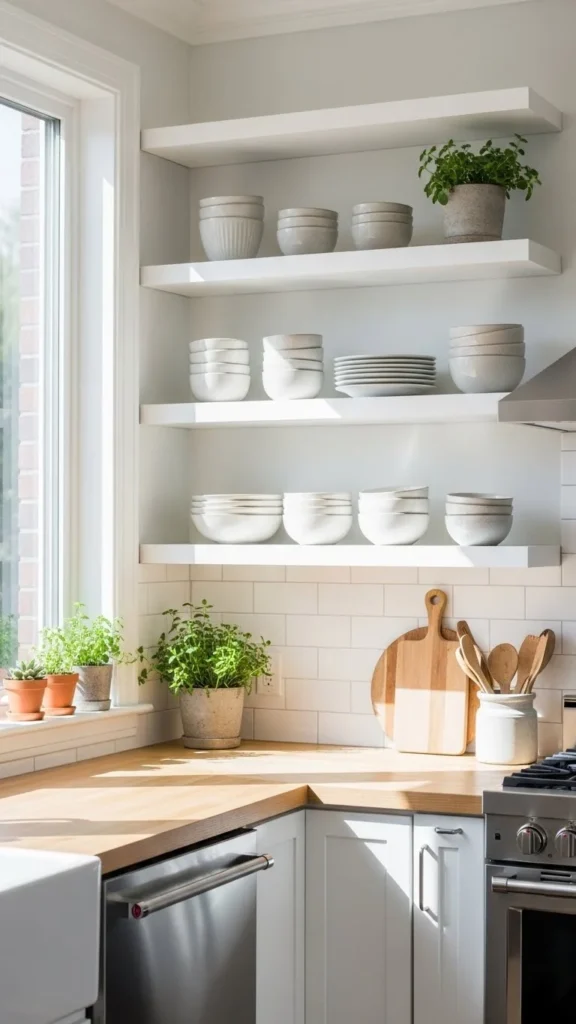
Below is a simple, practical guide to styling open kitchen shelves so they feel curated, functional, and clutter-free.
Start With a Clear Purpose for Each Shelf
Before placing a single item, decide what role each shelf will play. Open shelving works best when it’s intentional, not random.
Ask yourself:
- Is this shelf mostly decorative?
- Is it for daily-use dishes?
- Is it a mix of both?
A good rule of thumb:
- Top shelves → lighter décor and display pieces
- Middle shelves → plates, bowls, cups you use often
- Lower shelves → heavier items you can grab easily
This mental organization prevents overcrowding and helps your shelves feel balanced.
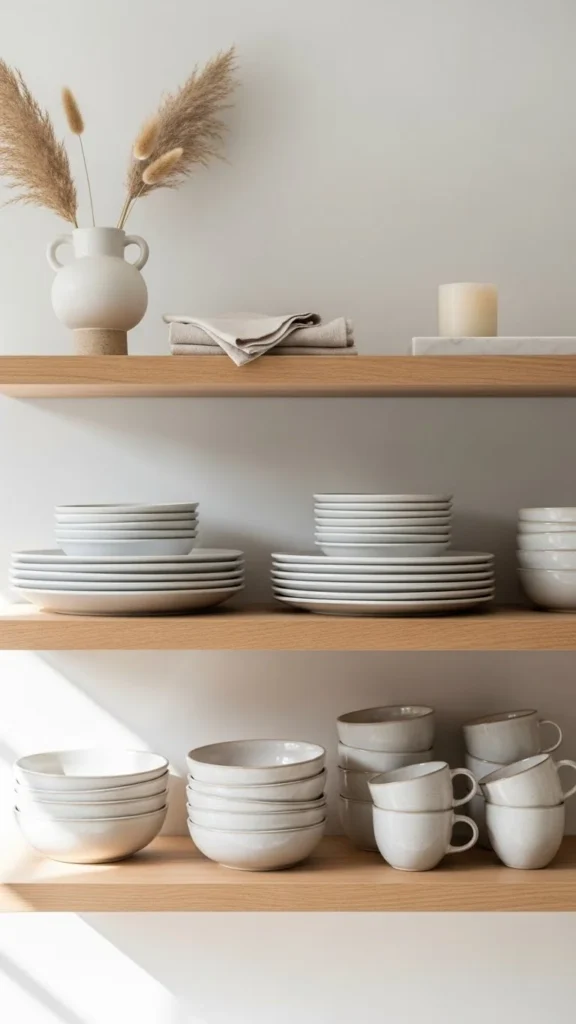
Limit Your Color Palette (This Changes Everything)
One of the biggest causes of cluttered-looking shelves is too many colors. Even beautiful items can feel chaotic when there’s no color harmony.
Try one of these simple palettes:
- All white and cream
- Earthy neutrals (beige, clay, soft gray)
- White dishes with warm wood accents
- One accent color repeated subtly
You don’t need matching sets—just a shared tone. This instantly creates calm and visual flow.
Quick tip:
- If you own colorful dishes you love, group them together instead of spreading them across all shelves.
Use the “Rule of Breathing Space”
Open shelves need empty space to look good. Crowding every inch makes even expensive kitchens feel messy.
Follow this spacing guide:
- Leave at least 2–3 inches of space between item groups
- Don’t line items edge-to-edge
- Stop before the shelf feels “full”
Think of shelves like a gallery wall. The empty space is part of the design.
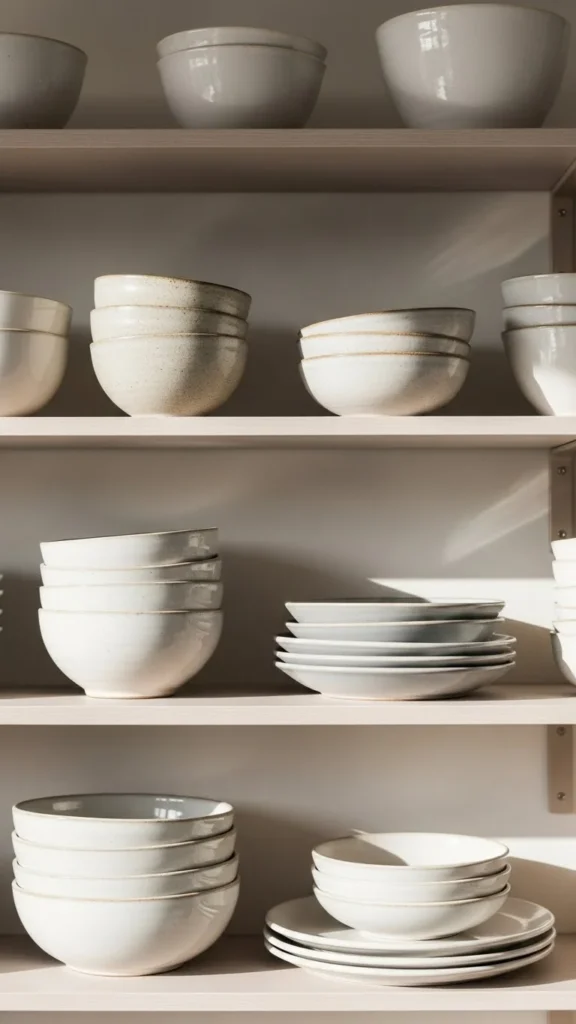
Stack, Don’t Scatter
Scattering single items across shelves is a common mistake. Stacking creates structure and reduces visual noise.
Best items to stack:
- Plates (vertical or horizontal stacks)
- Bowls in descending sizes
- Cutting boards layered behind dishes
- Cookbooks grouped upright or flat
This keeps things tidy while still looking styled—not stiff.
Bonus tip:
- Odd numbers (3 or 5 items per stack) tend to look more natural.
Add Texture With Natural Materials
If everything on your shelves is smooth and glossy, the display can feel flat. Texture adds warmth without clutter.
Easy texture boosters:
- Wooden cutting boards
- Ceramic pieces with a handmade feel
- Woven baskets (small ones only)
- Linen or cotton folded neatly
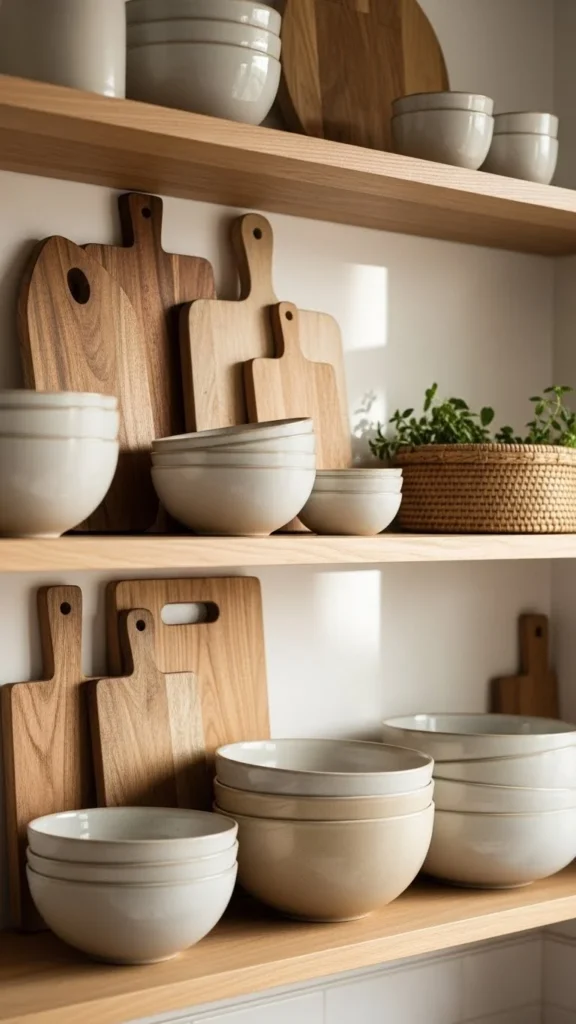
Stick to one or two textures per shelf so it stays calm and intentional.
Keep Everyday Items Practical and Pretty
Open shelves aren’t just for show. They work best when they hold things you actually use.
Choose items that are:
- Neutral in color
- Simple in shape
- Easy to clean and restyle
Good everyday shelf items:
- Matching mugs
- White or stoneware bowls
- Clear glass jars with dry goods
- Everyday plates you reach for daily
When items are both useful and attractive, shelves feel effortless instead of staged.
Rotate, Don’t Overload
You don’t need to display everything you own at once. Think of open shelves as rotating displays, not permanent storage.
Try this approach:
- Keep 20–30% of your shelf space intentionally empty
- Store extra items in cabinets
- Swap décor seasonally or when you crave a refresh
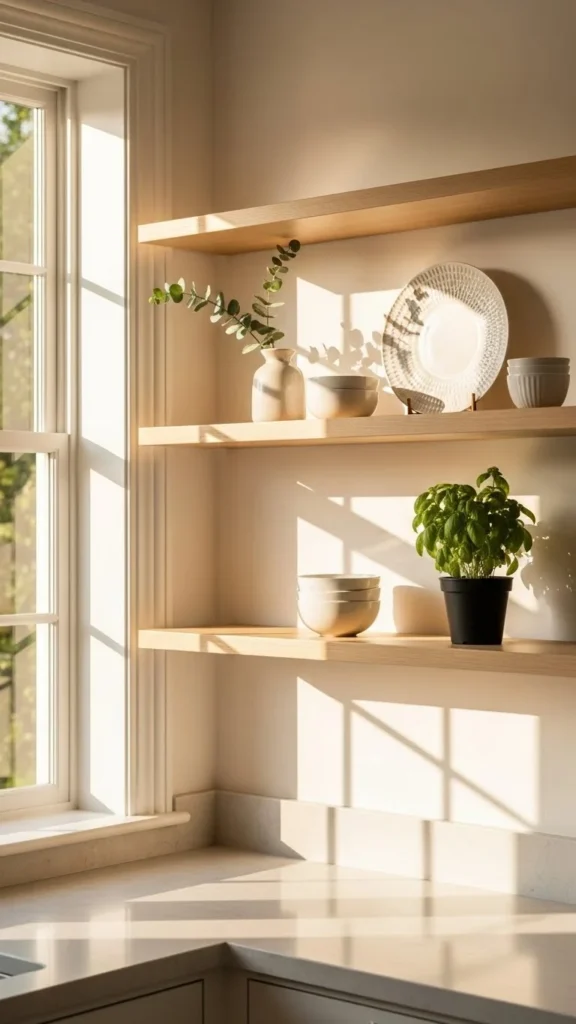
This keeps shelves feeling fresh without buying anything new.
Edit Regularly (Five-Minute Rule)
Clutter sneaks in over time. A simple habit prevents it.
Once a month:
- Remove anything you haven’t used or loved
- Wipe shelves clean
- Adjust spacing if items crept too close together
If styling takes longer than five minutes, it’s probably too crowded.
Final Takeaway
Styling open kitchen shelves without clutter isn’t about perfection—it’s about restraint, balance, and intention. Choose a calm color palette, leave breathing room, stack thoughtfully, and rotate items instead of piling them on.
When done right, open shelves make your kitchen feel lighter, more personal, and easier to use.
Save this guide for later the next time your shelves start feeling a little too full.

Leave a Reply